
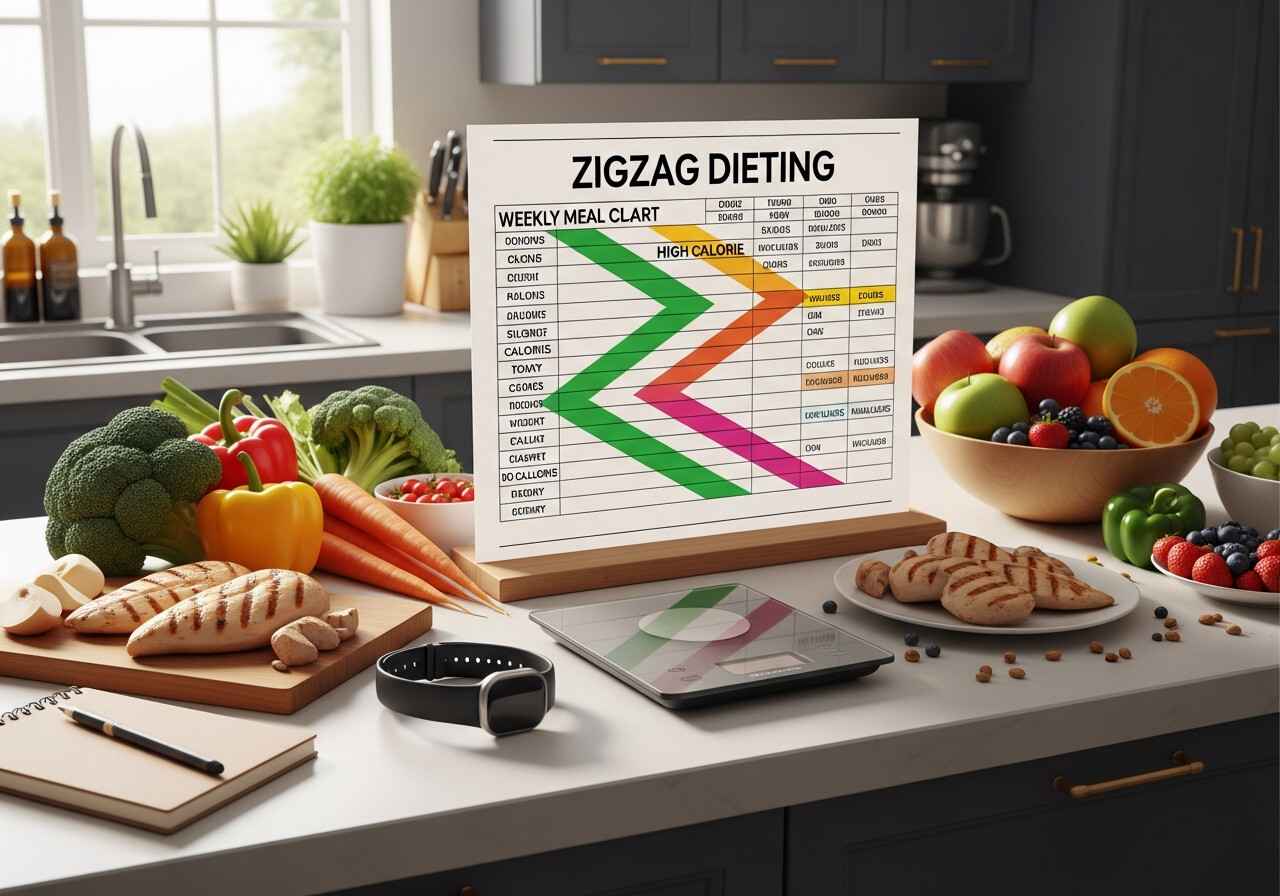
Your scale hasn’t budged in weeks, and you’re wondering if there’s a way to jumpstart your weight loss again. Zigzag dieting might be the answer you’ve been looking for. This eating approach alternates between high and low-calorie days to keep your metabolism guessing and help break through stubborn weight loss plateaus.
This guide is perfect for anyone who’s hit a wall with traditional dieting methods, fitness enthusiasts looking to lose fat while keeping muscle, or people who want a flexible eating plan that doesn’t feel restrictive every single day.
We’ll walk you through exactly what zigzag dieting is and how it works to restart your fat loss. You’ll learn how to create your own zigzag diet plan with the right calorie targets for your goals. Plus, we’ll cover how this method helps you lose fat while holding onto your hard-earned muscle mass, and answer the most common questions people have about making zigzag dieting work.
What Is Zigzag Dieting and How Does It Help Break Weight Loss Plateaus

How Zigzag Dieting Helps You Overcome Weight Loss Stalls
Weight loss plateaus happen to almost everyone trying to shed pounds. Your body adapts to consistent calorie restrictions by slowing down your metabolism, making it harder to lose weight even when you’re doing everything “right.” Zigzag dieting tackles this problem head-on by varying your daily calorie intake throughout the week.
The concept works by alternating between higher and lower calorie days, preventing your metabolism from adapting to a single calorie level. On high-calorie days, you might eat closer to your maintenance calories or even slightly above, while low-calorie days create a deficit that helps with weight loss. This approach keeps your metabolic rate guessing and prevents the downward spiral that typically occurs with traditional dieting.
When you follow a zigzag diet plan, your body doesn’t have time to fully adjust to restrictive eating patterns. The periodic higher-calorie days signal to your metabolism that food isn’t scarce, helping maintain higher metabolic rates. This strategic variation can restart weight loss progress that has stalled on conventional diets.
The Role of Zigzag Dieting in Maintaining Metabolic Rate
Your metabolism naturally slows down during extended periods of calorie restriction – it’s a survival mechanism that helped our ancestors survive food shortages. Traditional diets that maintain the same calorie deficit daily can trigger this metabolic slowdown within just a few weeks.
Zigzag dieting works differently by incorporating planned refeed days or higher-calorie periods. This strategic growth in calories helps maintain leptin levels, a hormone that plays a really important role in metabolic rate regulation. When leptin levels drop too low from consistent dieting, your metabolism slows significantly. The higher-calorie days in a zigzag diet schedule help prevent this dramatic leptin decrease.
Research shows that metabolic rate can drop by 10-40% during prolonged calorie restriction. By cycling calories, zigzag dieting helps reduce this metabolic adaptation, keeping your calorie-burning potential higher throughout your weight loss journey. The variation also helps preserve lean muscle mass, which burns more calories at rest than fat tissue.
Why Zigzag Dieting Is Useful in Continuous Weight Loss
Sustainable weight loss requires a strategy that you can stick with long-term while avoiding the frustrating plateaus that derail many dieters. Zigzag dieting addresses both of these challenges by providing built-in variety and metabolic advantages.
The psychological benefits are significant. Having planned higher-calorie days gives you something to look forward to, making the restrictive days more manageable. This reduces the likelihood of binge eating or completely abandoning your diet plan. Many people find zigzag dieting easier to follow than restrictive daily calorie limits because it builds flexibility into the program.
From a physiological standpoint, the calorie cycling prevents your body from fully adapting to a reduced calorie intake. Your metabolism stays more active, hormone levels remain more stable, and you’re more likely to continue losing weight consistently over time. This approach can be particularly common for people who have tried multiple diets without long-term success.
How Zigzag Dieting Helps You Achieve Sustainable Weight Loss
Long-term weight management requires more than just reaching your goal weight – it requires developing habits and strategies that you can maintain for life. Zigzag dieting teaches important skills that support sustainable weight loss, including calorie awareness, meal planning flexibility, and metabolic getting it.
The approach naturally teaches portion control and calorie awareness without the rigid restrictions of traditional dieting. You learn to adjust your intake based on your activity level, hunger cues, and social situations. This flexibility makes it easier to maintain your results once you reach your goal weight.
Unlike crash diets that often result in rapid weight regain, zigzag dieting promotes gradual, steady progress that’s more likely to stick. The method also helps preserve muscle mass during weight loss, which is really important for maintaining a higher metabolic rate long-term. More muscle means you can eat more calories while maintaining your weight, making long-term success more achievable.
What to Expect When Starting with Zigzag Dieting for Weight Management
Starting a zigzag diet requires some initial planning and adjustment as your body adapts to the new eating pattern. During the first week or two, you might experience some hunger fluctuations as your body adjusts to the varying calorie levels throughout the week.
Weight fluctuations are completely normal when following a zigzag diet schedule. Your weight will naturally be higher after high-calorie days due to growing food volume and water retention, then drop on lower-calorie days. Focus on weekly averages rather than daily weigh-ins to track your true progress.
Energy levels may vary initially as your body adapts to the cycling pattern. Many people report feeling more energetic on higher-calorie days and slightly more fatigued on restriction days. This typically balances out after 2-3 weeks as your body adapts to the new routine. Planning your workout schedule around your calorie cycling can help get the most out of performance and results.
How to Create a Zigzag Diet Plan That Works for You

How to Set Up a Zigzag Diet Plan Based on Your Daily Calorie Needs
Starting your zigzag diet plan begins with calculating your baseline daily calorie needs. First, determine your Total Daily Energy Expenditure (TDEE) using an online calculator or the Harris-Benedict equation. This gives you the foundation for creating your high-calorie and low-calorie days.
For weight loss, structure your week with 3-4 low-calorie days and 3-4 higher-calorie days. Your low-calorie days should be 300-500 calories below your TDEE, while high-calorie days should match or slightly exceed your maintenance calories. For example, if your TDEE is 2,200 calories, set low days at 1,700-1,900 calories and high days at 2,200-2,400 calories.
A popular zigzag diet schedule alternates every other day – Monday (low), Tuesday (high), Wednesday (low), Thursday (high), and so on. Some people prefer clustering low days on weekdays and high days on weekends to match their social schedules.
Track your average weekly calorie intake to make sure you maintain an overall deficit. If your weekly average is too high, adjust by lowering calories on high days or adding an extra low day.
The Key Elements to Include in Your Zigzag Diet Schedule
Your zigzag diet plan needs strategic timing and consistency to get the most out of fat loss while preserving muscle mass. Plan your high-calorie days around your most intense workouts, typically strength training sessions. This provides your muscles with adequate fuel for performance and recovery.
Design your schedule around your lifestyle patterns. If you’re more active on weekends, make Saturday and Sunday your high-calorie days. For those with demanding weekday schedules, consider making Wednesday a high day to break up consecutive low days.
Helps elements include:
- Consistent meal timing: Eat at regular intervals regardless of calorie level
- Adequate protein: Maintain 0.8-1g per pound of body weight daily
- Strategic carb cycling: Higher carbs on high days, moderate carbs on low days
- Hydration tracking: Water needs remain constant across all days
- Sleep schedule: Maintain consistent sleep patterns to support hormone regulation
Your zigzag diet calculator for weight loss should account for your activity level, with more active individuals requiring higher calorie swings between low and high days.
How to Customize Your Zigzag Diet for Fat Loss and Muscle Preservation
Customizing your zig-zag diet plan requires balancing aggressive fat loss with muscle retention. Protein intake becomes your anchor – keep it consistent across all days to maintain muscle protein synthesis. On low-calorie days, reduce carbohydrates first, then fats, while keeping protein stable.
Time your high-calorie days strategically around resistance training. Your muscles are most receptive to nutrients during the 24-48 hour window post-workout, making this the ideal time for growing caloric intake. Schedule leg days or compound movement sessions on high days when possible.
| Goal | Low Day Strategy | High Day Strategy |
|---|---|---|
| Fat Loss Focus | 40% protein, 30% carbs, 30% fat | 30% protein, 45% carbs, 25% fat |
| Muscle Retention | 35% protein, 35% carbs, 30% fat | 25% protein, 50% carbs, 25% fat |
| Athletic Performance | 30% protein, 40% carbs, 30% fat | 20% protein, 55% carbs, 25% fat |
Adjust your zigzag calories based on your body’s response. If you’re losing muscle mass, calories on high days, or add an extra high day. If fat loss stalls, create a larger deficit on low days or reduce high-day calories slightly.
How to Adjust Your Zigzag Diet Plan as You Progress
Your zig-zag diet for weight loss needs regular adjustments as your body composition changes. Recalculate your TDEE every 10-15 pounds of weight loss, as your caloric needs decrease with body weight reduction.
Monitor your progress through multiple metrics beyond the scale. Take weekly progress photos, body measurements, and track your strength performance in the gym. If you notice strength declining or excessive fatigue, your deficit may be too aggressive.
Signs you need to adjust your zigzag diet schedule:
- Weight loss stalling for 2+ weeks
- Declining workout performance
- grow hunger or cravings
- Sleep quality deteriorating
- Mood changes or irritability
When adjustments are helpful, make small changes first. Reduce high-day calories by 100-150 or add one additional low day per week. Avoid making drastic changes that could trigger metabolic slowdown.
Best Practices for Following a Zigzag Diet for Weight Loss
Success with zigzag dieting comes from consistency and proper execution. Meal prep becomes especially important since you’re managing two different calorie targets throughout the week. Prepare base meals that you can easily modify by adjusting portion sizes or adding calorie-dense ingredients on high days.
Use a reliable food tracking app to monitor your zigzag calories accurately. Apps like MyFitnessPal or Cronometer help you stay within your daily targets and track weekly averages. Log everything, including cooking oils, condiments, and beverages.
Stay flexible with your approach. Life happens, and sometimes you’ll need to swap high and low days. The key is maintaining your weekly calorie average rather than stressing over perfect day-to-day execution. If you have an unexpected high-calorie event, adjust the following day accordingly.
Does the zig-zag diet work? Research shows it can be as traditional linear dieting for weight loss, while potentially offering psychological benefits. The varied calorie intake can help some people stick to their plan longer than restrictive daily deficits.
Focus on whole foods regardless of your calorie target. Fill up on lean proteins, vegetables, fruits, and complex carbohydrates. Save processed foods and treats for high days when you have more caloric flexibility, but don’t make them the foundation of your plan.
How Zigzag Dieting Helps You Lose Fat and Retain Muscle Mass

Why Zigzag Dieting Promotes Fat Loss While Preserving Muscle Mass
The biggest challenge most dieters face isn’t just losing weight – it’s losing the right kind of weight. Traditional calorie restriction often leads to muscle loss alongside fat loss, leaving you with a slower metabolism and a softer physique. Zigzag dieting tackles this problem head-on by creating metabolic flexibility that targets fat stores while protecting lean muscle tissue.
When you eat the same low-calorie amount day after day, your body adapts by slowing down your metabolic rate and breaking down muscle tissue for energy. Your body sees muscle as expensive to maintain and will sacrifice it to preserve fat stores during prolonged caloric restriction. The zigzag diet disrupts this adaptive response by alternating between higher and lower calorie days, keeping your metabolism guessing and preventing the muscle-wasting signals that come with sustained caloric deficits.
High-calorie days in your zigzag diet plan provide your muscles with adequate energy and nutrients to maintain their size and strength. These refeed days send signals to your body that food isn’t scarce, reducing the production of stress hormones like cortisol that promote muscle breakdown. Meanwhile, the lower-calorie days create a deficit that helps with fat loss without lasting long enough to trigger significant metabolic adaptation.
How to Combine Zigzag Dieting with Strength Training for Better Results
Strength training becomes even stronger when paired with zigzag dieting. The key is timing your higher-calorie days to coincide with your most demanding workouts. This strategic approach makes sure your muscles have the fuel they need for intense training sessions while still maintaining an overall caloric deficit for fat loss.
Schedule your high-calorie days on your heaviest lifting days or when you’re training large muscle groups like legs or back. These workouts demand the most energy and create the greatest stimulus for muscle growth and retention. Your muscles will use the extra carbohydrates for glycogen replenishment and the additional protein for repair and growth.
On lower-calorie days, focus on lighter training sessions, cardio, or rest days. Your body will tap into fat stores for energy while your muscles recover from previous workouts. This cycling approach gets the most out of the benefits of both your training and your zigzag diet schedule.
| Training Day Type | Calorie Level | Focus |
|---|---|---|
| Heavy compound lifts | High calories | Fuel performance and recovery |
| Isolation/accessory work | Moderate calories | Maintain intensity |
| Cardio/light training | Low calories | Enhance fat burning |
| Rest days | Low calories | Promote fat utilization |
The Importance of Protein and Carbs in a Zigzag Diet for Muscle Maintenance
Protein remains your most important macronutrient for muscle preservation, regardless of whether you’re on a high or low-calorie day. Aim for 0.8-1.2 grams of protein per pound of body weight consistently across all days of your zigzag eating pattern. This makes sure your muscles have a steady supply of amino acids for repair and maintenance.
Carbohydrates become the variable that creates your caloric swings in zigzag dieting. On high-calorie days, grow your carbohydrate intake to fuel workouts and replenish muscle glycogen. These carbs spare protein from being converted to energy, allowing it to fulfill its muscle-building role instead. Focus on nutrient-dense sources like oats, rice, potatoes, and fruits.
On low-calorie days, reduce carbohydrates while maintaining protein intake. This forces your body to use stored fat for energy while preserving muscle tissue. The protein continues protecting your lean mass even in a caloric deficit, while the reduced carbs create the energy gap, which helps for fat loss.
How to Adapt Zigzag Dieting for Fitness Goals Beyond Weight Loss
Zigzag dieting isn’t just for weight loss – it’s incredibly versatile for various fitness goals. Athletes looking to Better body composition during their season can use moderate zigzag patterns that don’t create extreme deficits. Bodybuilders preparing for competition can use more aggressive zigzag cycles to strip away stubborn fat while maintaining muscle fullness.
For muscle gain goals, reverse the traditional approach by making your high-calorie days higher and your low-calorie days closer to maintenance level. This creates an overall caloric surplus while still providing some metabolic benefits. The varying intake prevents excessive fat gain while supporting muscle growth.
Endurance athletes can time their high-calorie days around long training sessions or competitions, while using lower-calorie days during easier training periods. This approach supports performance when it matters most while managing overall energy balance.
The Benefits of Combining Zigzag Dieting with Resistance Exercises
Resistance training and zigzag dieting create a strong working together for body recomposition. The combination addresses both sides of the muscle-preservation equation: providing the right training stimulus and the right nutritional support at the right times.
Regular resistance training sends strong signals to your body that muscle tissue is healthy and shouldn’t be broken down for energy. When combined with the metabolic flexibility of zigzag dieting, this creates an environment where fat loss can occur without muscle sacrifice. The varying calorie intake prevents metabolic adaptation while resistance training maintains muscle mass and strength.
The psychological benefits are equally important. Having higher-calorie days to look forward to makes the diet more sustainable, reducing the likelihood of binge episodes that can derail progress. This Better adherence, combined with maintained training intensity from adequate fuel on high-calorie days, leads to better long-term results than traditional restrictive dieting approaches.
Your zigzag diet and resistance training schedule should work together smoothly, with each supporting the other to create the lean, strong physique you’re working toward.
How to Track Progress on a Zigzag Diet

How to Monitor Your Weight Loss While Following a Zigzag Diet
Tracking weight loss on a zigzag diet requires a different approach than traditional steady-calorie diets. Your weight will naturally fluctuate more due to the varying calorie intake throughout your zigzag diet schedule. Daily weigh-ins become less meaningful since high-calorie days typically cause temporary water weight gain, while low-calorie days may show dramatic drops that aren’t true fat loss.
The most common method is taking weekly averages rather than focusing on daily numbers. Weigh yourself at the same time each morning, preferably after using the bathroom and before eating or drinking anything. Record these numbers, but calculate your weekly average to see the real trend. Many people using the azig-zagg diet plan find their weight follows a sawtooth pattern – up on higher calorie days, down on lower calorie days, but trending downward overall.
Body measurements provide another important data point. Measure your waist, hips, arms, and thighs weekly using the same measuring tape at consistent locations. Sometimes the scale won’t budge, but you’ll lose inches, especially when zigzag dieting helps preserve muscle mass while burning fat.
How to Track Muscle Gain and Fat Loss During Zigzag Dieting
Traditional scales can’t distinguish between muscle and fat loss, making body composition tracking helpful for zigzag diet success. The most accessible method is to take progress photos taken under consistent lighting conditions, wearing the same clothes, and from multiple angles. Take these weekly rather than daily to avoid getting discouraged by normal fluctuations.
Body fat percentage measurements offer more precise data. DEXA scans provide the gold standard but are expensive and not always accessible. Bioelectrical impedance scales give reasonable estimates when used consistently – at the same time of day, with similar hydration levels, and following the same routine. While not perfectly accurate, they show trends over time.
For those serious about tracking, circumference measurements combined with body fat formulas can estimate muscle and fat changes. The Navy Body Fat Formula uses neck, waist, and hip measurements to calculate body fat percentage. When this decreases while your weight stays stable or drops slowly, you’re likely gaining muscle while losing fat – exactly what the zig-zag diet plan should achieve.
Strength and performance metrics also indicate muscle preservation. Track your workout performance, including weights lifted, reps completed, or endurance markers. If strength maintains Better while losing weight, your zigzag method weight loss approach is working correctly.
How Often to Track Your Progress When Using a Zigzag Diet
The frequency of progress tracking depends on your goals and personality type. Daily weight tracking works for some people who understand the fluctuations, but weekly measurements prove more practical for most zigzag dieting followers. This schedule allows the natural ups and downs to average out while still providing regular feedback.
Measure body circumferences weekly on the same day, preferably your lowest-calorie day when water retention is minimal. Monthly body composition assessments work well for DEXA scans or Complete measurements, while progress photos can be taken bi-weekly.
Food logging should happen daily during the initial weeks to make sure you’re hitting your calorie targets for high and low days. Many zigzag diet app options simplify this process by calculating your varying daily targets automatically. After establishing good habits, some people transition to tracking just a few days per week, focusing on the days they typically struggle with most.
Adjusting Your Diet Based on Tracking Results
Your tracking data should guide adjustments to fix your zigzag diet plan. If weight loss stalls for more than two weeks despite accurate tracking, consider reducing calories on both high and low days by 100-150 calories. The key is maintaining the same calorie differential between high and low days while lowering the overall average.
When measurements show muscle loss alongside fat loss, increase protein intake and consider raising calories on higher days while keeping low days the same. This adjustment maintains the zigzag calories concept while providing more nutrients for muscle preservation.
Performance declines might indicate your low-calorie days are too restrictive. Try increasing those days by 100-200 calories while maintaining the same high-day targets. The goal is sustainable energy levels that support your workouts and daily activities.
Common Tracking Mistakes to Avoid on the Zigzag Diet
The biggest mistake is panicking over daily weight fluctuations. Your weight will swing more dramatically on a zig-zag diet than on a consistent calorie plan. High-carb, high-sodium days naturally cause water retention, while low-calorie days can show artificial losses that aren’t true fat loss.
Inconsistent measurement timing creates false data. Weighing yourself at different times, after meals, or in different clothing skews results. Establish a routine and stick to it religiously for meaningful data.
Many people make the mistake of adjusting their plan too quickly based on short-term results. Zigzag weight loss requires patience – give any adjustment at least two weeks before making changes. Your body needs time to adapt to the calorie cycling pattern.
Finally, avoid using tracking as punishment or reward. The data serves as information to fix your approach, not as a judgment of your worth or progress. Some weeks will show better results than others, and that’s completely normal when following any zig-zag diet for weight loss.
Common Questions About Zigzag Dieting

Is Zigzag Dieting Suitable for People of All Fitness Levels?
Zigzag dieting works for most people, but your current fitness level affects how you should approach it. Beginners often see the best results because their bodies respond quickly to calorie cycling. If you’re new to dieting, start with smaller calorie swings – maybe 200-300 calories between high and low days rather than dramatic changes.
Athletes and experienced dieters can handle more aggressive zigzag patterns since their metabolisms are already adapted to training stress. They might cycle between 1,800 calories on low days and 2,400 on high days without issues.
People with medical conditions like diabetes should check with their doctor before starting any zig-zag diet plan. The calorie fluctuations can affect blood sugar levels, so monitoring becomes extra important.
Your activity level matters too. If you’re sedentary, stick to gentler calorie swings. Active people can match their high-calorie days with intense workout sessions for better results.
Can Zigzag Dieting Be Combined with Other Diet Plans for Faster Results?
Zigzag dieting pairs well with several other approaches, but timing matters. Combining it with intermittent fasting creates a strong fat-loss combination – eat your higher calories during your feeding window and lower calories on fasting days.
Keto dieters can use zigzag calories by cycling carbs instead of just calories. Keep carbs low on deficit days and add clean carbs on higher-calorie days. This approach helps maintain ketosis while preventing metabolic slowdown.
The zig-zag diet also works with flexible dieting (IIFYM). You can hit your macro targets while cycling total calories throughout the week. This gives you the metabolic benefits of calorie cycling with the flexibility of tracking macros.
Avoid combining zigzag with extreme restriction diets like very low-calorie diets (VLCDs). The constant calorie changes already stress your system – adding severe restriction can backfire and slow your metabolism even more.
What Are the Advantages of Zigzag Dieting Over Other Weight Loss Methods?
Does zigzag dieting work better than steady calorie restriction? The research shows some clear advantages. Your metabolism stays more active because it never fully adapts to a single calorie level. Traditional diets often lead to metabolic slowdown after 4-6 weeks, but zigzag patterns keep your body guessing.
Mental flexibility is huge. Instead of eating the same calories every day, you get variety. High-calorie days feel like mini breaks from dieting, which helps with long-term adherence. Many people find zigzag diet schedules easier to stick with than constant restriction.
The approach preserves muscle mass better than steady low-calorie diets. Higher-calorie days provide enough energy for strength training, while lower-calorie days create the deficit that helps with fat loss. This combination keeps your body composition Better instead of just losing weight from both fat and muscle.
Zigzag eating also fits real life better. You can plan high-calorie days around social events, holidays, or intense training sessions. Low-calorie days work well during busy periods when you naturally eat less anyway.
Can Zigzag Dieting Help with Long-Term Weight Maintenance?
Zigzag weight loss methods teach you skills that translate perfectly to maintenance. You learn to eat different amounts on different days based on your activity and schedule. This flexibility becomes valuable when maintaining your goal weight.
The metabolic benefits continue during maintenance. Your metabolism stays more responsive because it’s used to calorie fluctuations. People who maintain weight loss successfully often naturally eat more on some days and less on others – zigzag dieting formalizes this pattern.
Zig-zag diet plans help you understand hunger and satiety signals better. You learn the difference between true hunger and habit-based eating. This awareness prevents the mindless eating that leads to weight regain.
The psychological benefits last too. You don’t develop the “all or nothing” mindset that destroys many maintenance attempts. Bad eating days don’t derail your progress – they just become natural low-calorie days in your cycle.
What Challenges Might You Face While Following the Zigzag Diet?
Planning becomes more complex with zigzag diet schedules. You can’t meal prep the same way every week – high and low days need different amounts of food. Many people find zigzag diet apps helpful for tracking the changing calorie targets.
Social situations get tricky when your eating schedule doesn’t match others. If your friends want pizza on your low-calorie day, you need backup plans. Flexibility helps, but it requires more mental energy than eating the same way daily.
Does the zigzag diet work for everyone? Some people struggle with the calorie swings. They either overeat on high days or feel deprived on low days. Success requires honest self-assessment of your relationship with food.
Initial hunger pangs hit harder on low-calorie days, especially during the first two weeks. Your body needs time to adapt to the changing pattern. Many people quit before seeing results because this adjustment period feels uncomfortable.
Zigzag diet calculators help with the math, but they can’t account for daily life changes. Stress, poor sleep, or unexpected events can throw off your planned schedule. The most successful zigzag dieters learn to adjust their patterns based on real-world situations rather than rigidly following predetermined schedules.

Zigzag dieting offers a smart way to shake things up when your weight loss has hit a wall. By cycling between high and low-calorie days, you’re helping trick your metabolism into staying active instead of adapting to a single calorie level.
This approach helps you break through plateaus while keeping more of your hard-earned muscle mass compared to traditional steady dieting.
The beauty of zigzag dieting lies in its flexibility and sustainability. You can customize your high and low-calorie days around your schedule, workouts, and social life. Track your progress through measurements, photos, and how your clothes fit rather than obsessing over daily weight fluctuations.
If you’ve been stuck at the same weight for weeks despite eating less and exercising more, zigzag dieting might be exactly what your body needs to start losing fat again.
FAQs
What is zigzag dieting?
Zigzag dieting is an approach where calorie intake fluctuates on different days of the week. This helps prevent metabolic slowdown and keeps the body burning fat, making it a common method for overcoming weight loss plateaus.
How does zigzag dieting help with weight loss plateaus?
Zigzag dieting works by varying calorie intake, which helps to avoid metabolic adaptation. This method prevents the body from adjusting to a specific calorie intake, allowing you to continue losing weight even after reaching a plateau.
Does zigzag dieting really work for fat loss?
Yes, zigzag dieting is common for fat loss. By switching calorie intake on different days, your metabolism remains active, which can lead to consistent fat loss without hitting a plateau.
What is the best zigzag diet plan for weight loss?
The best zigzag diet plan for weight loss depends on your personal calorie needs. It involves eating higher calories on workout days and lower calories on rest days, creating a balanced approach to fat loss while maintaining muscle mass.
How do you create a zigzag diet schedule?
To create a zigzag diet schedule, alternate between high-calorie and low-calorie days. Typically, you consume more calories on workout days to fuel your muscles and fewer calories on rest days to burn fat.
Is zigzag dieting good for muscle gain?
Yes, zigzag dieting can be beneficial for muscle gain. Consuming more calories on workout days supports muscle growth while still helping with fat loss. This method provides the energy needed for muscle-building exercises.
How often should you track weight loss on a zigzag diet?
It’s ideal to track your weight loss progress once a week while following a zigzag diet. Tracking weekly allows you to measure changes in weight, body composition, and overall progress without becoming discouraged by day-to-day fluctuations.
Can I combine zigzag dieting with intermittent fasting?
Yes, you can combine zigzag dieting with intermittent fasting. The two approaches work well together by alternating calorie intake on different days and incorporating fasting periods, helping with fat loss while maintaining muscle mass.
What are the benefits of zigzag dieting over traditional dieting?
Zigzag dieting offers the advantage of keeping your metabolism active, preventing plateaus. Unlike traditional dieting, which can lead to a slower metabolism over time, zigzag dieting helps avoid metabolic slowdown and encourages continuous weight loss.
What are some common mistakes to avoid while following a zigzag diet?
Some common mistakes include not accurately tracking your calorie intake, skipping high-calorie days, or over-restricting calories. To see results, it’s important to stick to your zigzag diet plan and adjust your calories based on your progress.