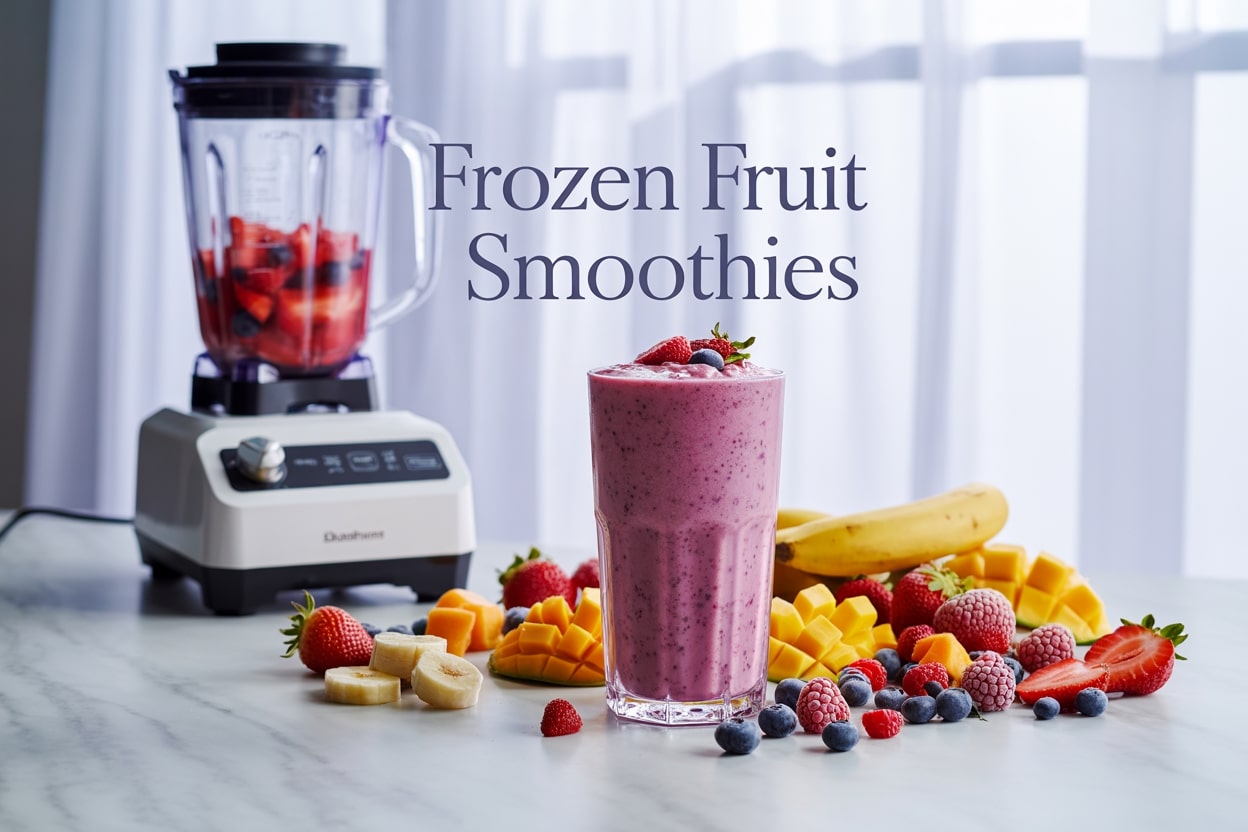
Frozen fruit for smoothies transforms your morning routine into a nutritious, convenient experience. This guide is perfect for busy professionals, health-conscious families, and anyone who wants to create delicious smoothies without the hassle of constantly buying fresh produce.
Using frozen fruits for smoothies offers major advantages over fresh options – they’re available year-round, often more affordable, and create that thick, creamy texture you love without adding ice. You’ll never have to worry about fruit going bad in your fridge again.
We’ll explore the best frozen fruits for smoothie making and which ones give you the most bang for your buck. You’ll also learn proper blending techniques that prevent chunky disasters and create silky-smooth results every time. Plus, we’ll share proven recipes that work with common ingredients you probably already have at home.
Benefits of Using Frozen Fruit in Smoothies

Achieve Perfect Creamy Texture Without Ice
When you use frozen fruit for smoothies, you get that thick, creamy consistency everyone craves without watering down the flavors with regular ice cubes. Frozen fruits act as natural ice while contributing sweetness and nutrients to your blend. The frozen pieces break down during blending to create a rich, milkshake-like texture that’s impossible to achieve with fresh fruit alone.
This creamy quality works especially well with bananas, mangoes, and berries. As these frozen fruits for smoothies blend, they create a velvety base that coats your spoon perfectly. You’ll notice your smoothie holds its shape longer too, staying thick and satisfying instead of separating into watery layers like smoothies made with fresh fruit and ice often do.
Lock in Peak Nutritional Value Year-Round
Frozen fruits for smoothie recipes actually preserve nutrients better than many fresh options sitting in your fridge for days. The freezing process happens at peak ripeness when vitamin and antioxidant levels are at their highest. This means your strawberry banana smoothie with frozen fruit delivers consistent nutritional benefits whether you make it in January or July.
Fresh produce loses vitamins during transport and storage, while frozen varieties maintain their nutritional profile for months. Studies show that frozen berries often contain more vitamin C than their fresh counterparts that have traveled long distances. Your frozen fruit smoothie with milk provides reliable nutrition without seasonal fluctuations in quality or availability.
Save Money on Seasonal Produce
Buying frozen fruit for smoothies costs significantly less than purchasing fresh, especially for out-of-season varieties. A bag of frozen mixed berries costs about the same year-round, while fresh berries can triple in price during winter months. This consistency helps you budget better and enjoy your favorite smoothie recipes with yogurt and frozen fruit without breaking the bank.
Buying in bulk saves even more money. Large frozen fruit packages offer better per-ounce pricing than smaller containers, and you can portion exactly what you need without worrying about spoilage. Your frozen fruit smoothie with almond milk becomes an affordable daily habit instead of an expensive treat.
Eliminate Food Waste from Overripe Fruit
Fresh fruit has a narrow window of perfect ripeness before it becomes too soft or develops brown spots. Frozen options eliminate this race against time entirely. You can store frozen fruits for months without quality loss, using exactly what you need for each smoothie with greek yogurt and frozen fruit.
This reliability means you’ll never throw away moldy berries or mushy bananas again. Your frozen fruit and milk smoothie ingredients stay fresh and ready whenever inspiration strikes, whether that’s early morning or late evening snack time.
Best Frozen Fruits for Smoothie Making

Top Berry Choices for Antioxidant Power
Berries pack the biggest antioxidant punch when it comes to frozen fruits for smoothies. Blueberries top the list as smoothie superstars – they’re loaded with anthocyanins that give them their deep blue color and incredible health benefits. Wild blueberries contain even higher antioxidant levels than cultivated varieties, making them perfect for your morning smoothie routine.
Strawberries bring natural sweetness alongside vitamin C and fiber. They blend beautifully with bananas and yogurt, creating classic combinations that never get old. Frozen strawberries actually work better than fresh ones since they break down more easily and create that thick, creamy texture everyone loves.
Raspberries add tartness and incredible texture to any blend. Their seeds provide extra fiber, though you can strain them out if you prefer completely smooth drinks. Blackberries offer similar benefits with a slightly sweeter profile that pairs wonderfully with tropical fruits.
Mixed berry blends give you variety without the hassle of buying multiple bags. These pre-mixed options usually contain strawberries, blueberries, raspberries, and blackberries in perfect proportions. They’re ideal for easy smoothie recipes with frozen fruit when you want consistent results every time.
Tropical Fruits That Create Creamy Bases
Mango transforms any smoothie into a creamy, luxurious treat without needing dairy products. This tropical fruit contains natural enzymes that help create smooth textures while adding vibrant orange color and tropical flavor. Frozen mango chunks blend perfectly with coconut milk or almond milk for dairy-free options.
Pineapple brings bright acidity that balances sweeter fruits while adding natural digestive enzymes. Its tangy flavor cuts through rich ingredients like Greek yogurt or protein powder. Frozen pineapple works especially well in green smoothies since it masks the taste of leafy vegetables.
Banana serves as the ultimate smoothie base, providing natural thickness and sweetness. While you can use fresh bananas, frozen ones create that ice cream-like consistency that makes smoothies feel like dessert. Overripe bananas work perfectly for freezing – just peel and slice them before storing.
Coconut adds richness and healthy fats that help you feel satisfied longer. Frozen coconut flakes or chunks blend into creamy goodness, especially when combined with other tropical fruits. They’re perfect for frozen fruit smoothie with almond milk recipes.
Stone Fruits for Natural Sweetness
Peaches bring natural candy-like sweetness that reduces the need for added sugars. Their soft texture when frozen breaks down easily in blenders, creating smooth, velvety drinks. Yellow peaches offer classic peachy flavor, while white peaches provide more delicate, floral notes.
Cherries pack intense flavor and natural melatonin, making them perfect for evening smoothies. Sweet cherries work better than tart varieties for most smoothie applications, though sour cherries can add interesting complexity when balanced with sweeter fruits.
Plums offer unique flavor profiles depending on the variety – from sweet Santa Rosa plums to tangy black plums. They add beautiful color ranging from deep purple to golden yellow. Frozen plums blend well with berries and create interesting flavor combinations.
Apricots provide subtle sweetness with hints of honey and vanilla. They’re naturally lower in sugar than many other stone fruits but still deliver satisfying sweetness. Dried apricots can also be frozen and work wonderfully in smoothie bowls where you want chewy texture contrast.
These stone fruits work particularly well in smoothie recipes with yogurt and frozen fruit since their natural sugars complement the tanginess of yogurt perfectly.
Proper Storage and Preparation Techniques

Flash Freezing Fresh Fruit at Home
Flash freezing transforms your fresh fruit into smoothie-ready ingredients while preserving peak flavor and nutritional value. Start by washing and thoroughly drying your fruit – excess moisture creates ice crystals that damage texture. For berries, remove stems and spread them in a single layer on parchment-lined baking sheets. Cut larger fruits like mangoes, peaches, and bananas into smoothie-sized chunks before freezing.
The key to successful flash freezing lies in preventing fruit pieces from sticking together. Space each piece so they don’t touch, allowing cold air to circulate freely. Place the baking sheets in your freezer for 2-3 hours until fruits are completely solid. Once frozen solid, transfer pieces to freezer bags or airtight containers.
Pre-portion your frozen fruit for smoothies into individual serving sizes – typically 1-2 cups per bag. This saves time during busy morning routines and ensures consistent smoothie results. Label each container with contents and freezing date for easy identification.
Optimal Storage Methods to Prevent Freezer Burn
Proper storage keeps your frozen fruits for smoothies tasting fresh for months. Freezer burn occurs when air reaches frozen surfaces, creating those unpleasant white, dry patches that ruin flavor. Combat this by removing as much air as possible from storage containers.
Vacuum-sealed bags offer the best protection, but freezer-safe zip-top bags work well when you press out excess air before sealing. Double-bagging provides extra insurance against freezer burn for long-term storage. Glass containers with tight-fitting lids also work excellently, especially for delicate berries.
Store your frozen fruit smoothie packs at 0°F (-18°C) or below for optimal quality. Most frozen fruits maintain peak flavor for 8-12 months when properly stored. Keep a rotation system – use older batches first to maintain the best taste in your smoothies.
| Storage Method | Shelf Life | Best For |
|---|---|---|
| Vacuum-sealed bags | 12+ months | All fruits |
| Freezer bags (double) | 8-10 months | Berries, chunks |
| Glass containers | 6-8 months | Delicate fruits |
| Freezer-safe containers | 8-10 months | Mixed fruit packs |
Pre-Smoothie Thawing Tips for Better Blending
While many people blend frozen fruit for smoothie recipes directly from frozen, partial thawing can improve blending results and reduce wear on your blender. The amount of thawing needed depends on your blender’s power and the type of fruit you’re using.
For high-powered blenders, most frozen fruits blend beautifully straight from the freezer. However, if you’re using a standard blender, let harder fruits like frozen mango or pineapple sit at room temperature for 5-10 minutes before blending. This slight softening makes blending smoother and prevents chunks in your finished smoothie.
Berries require minimal thawing – they’re naturally soft and break down easily. Frozen bananas benefit from 2-3 minutes of thawing to prevent your blender from overworking. Never fully thaw fruit before blending, as this creates a watery texture and reduces the thick, creamy consistency that makes frozen fruit smoothies so satisfying.
Quick thawing hack: run frozen fruit under cool water for 30 seconds to slightly soften the exterior while keeping the interior frozen. This technique works particularly well when making smoothie with frozen fruit and milk recipes where you want perfect blending without losing that refreshing chill.
Equipment and Blending Techniques

Choosing the Right Blender for Frozen Ingredients
When making smoothies with frozen fruit, your blender becomes your most important tool. High-powered blenders with at least 1000 watts and sharp, sturdy blades handle frozen ingredients effortlessly. Models like Vitamix, Blendtec, or Ninja are excellent choices for crushing frozen fruit smoothie packs without leaving chunky pieces behind.
Budget-friendly blenders can work too, but you’ll need to be strategic. Single-serve blenders often perform better with frozen fruit than their larger counterparts because the ingredients stay closer to the blades. Personal blenders like NutriBullet excel at creating smooth frozen fruit smoothies with milk or almond milk.
Key features to look for include:
- Variable speed settings for gradual blending
- Pulse function for breaking down tough frozen pieces
- Tamper tool for pushing ingredients toward blades
- Glass or BPA-free plastic pitcher that won’t crack from ice-cold ingredients
Layering Order for Smooth Consistent Results
The order you add ingredients makes a huge difference in achieving that perfect creamy texture. Start with liquids at the bottom – this creates a vortex that pulls frozen ingredients down toward the blades. Pour in your milk, almond milk, or juice first.
Next, add soft ingredients like Greek yogurt or protein powder. These help create a creamy base and prevent the blender from struggling with frozen chunks right away.
Finally, add your frozen fruit on top. This layering technique helps the blender gradually work through ingredients, creating smoother results without overworking the motor. For extra-thick frozen mixed fruit smoothies, add ice last to maintain that frosty consistency.
Liquid Ratios That Prevent Thick or Watery Smoothies
Getting the liquid ratio right is crucial for perfect texture. Too little liquid creates a thick, chunky mess that your blender can’t process. Too much liquid results in watery smoothies that taste diluted.
Start with this basic ratio for one serving:
- 1/2 to 3/4 cup frozen fruit
- 1/4 to 1/2 cup liquid (milk, almond milk, juice, or water)
- Optional: 1/4 cup Greek yogurt for creaminess
Adjust based on your desired consistency. Frozen berry smoothies typically need more liquid than softer fruits like frozen mango. For thick smoothie bowls, use minimal liquid. For drinkable smoothies, add liquid gradually until you reach the perfect consistency.
Different liquids create different textures:
- Whole milk produces the creamiest smoothies
- Almond milk creates lighter, nuttier flavors
- Coconut milk adds richness and tropical taste
- Water keeps smoothies lighter but may taste thin
Troubleshooting Common Blending Problems
Frozen fruit can be stubborn, but these solutions fix most blending issues quickly. If your blender struggles or makes grinding noises, stop immediately and add more liquid. Don’t force it – you’ll burn out the motor.
Chunky texture problems: Let frozen fruit sit at room temperature for 2-3 minutes before blending. This slight thaw helps blades grab ingredients better. Use the pulse function to break up large chunks before switching to continuous blending.
Blender getting stuck: Turn off the machine, remove the pitcher, and use a spoon to redistribute ingredients. Add a splash more liquid and restart on low speed.
Watery results: You’ve added too much liquid. Add more frozen fruit or a handful of ice to thicken. Greek yogurt also helps create body without diluting flavor.
Motor overheating: Most blenders have thermal protection that shuts them off when overheated. Let it cool for 15 minutes, then restart with more liquid and less frozen fruit per batch.
For consistently smooth results with any frozen fruit smoothie recipe, blend in short 30-second bursts rather than running continuously. This prevents overheating and gives you better control over texture.
Proven Smoothie Recipes Using Frozen Fruit

Green Smoothie Combinations That Actually Taste Good
The secret to making frozen fruit for smoothies work in green blends is balancing the earthiness of leafy greens with naturally sweet frozen fruits. Start with a base of frozen pineapple and mango – these tropical fruits mask the grassy flavor of spinach while providing natural sweetness and creamy texture.
Try this winning combination: 1 cup frozen pineapple, ½ cup frozen mango, 2 handfuls fresh spinach, 1 banana, and coconut milk. The frozen tropical fruits create a thick, dessert-like consistency while the banana adds extra creaminess. For a more adventurous blend, mix frozen berries with spinach, avocado, and a frozen banana. The healthy fats from avocado complement the antioxidants in the berries.
Another crowd-pleaser combines frozen peaches, baby kale, and a touch of vanilla protein powder. The stone fruit sweetness pairs beautifully with kale’s mild flavor, creating a fruit smoothie with frozen fruit that tastes like a peachy milkshake.
Protein-Packed Post-Workout Blends
Post-exercise nutrition becomes effortless with frozen fruit protein smoothie recipes that deliver both taste and recovery benefits. The key is combining protein sources with frozen fruits that enhance absorption and provide quick-digesting carbohydrates.
Your go-to recovery blend should include frozen berries, which reduce exercise-induced inflammation, paired with Greek yogurt or protein powder. Mix 1 cup frozen mixed berries, ½ cup Greek yogurt, 1 scoop vanilla protein powder, and almond milk for a greek yogurt frozen fruit smoothie that delivers 25+ grams of protein.
For chocolate lovers, blend frozen bananas with cocoa protein powder, almond butter, and a handful of frozen cherries. The natural sugars help replenish glycogen stores while the protein supports muscle repair. Frozen bananas create an incredibly thick texture that rivals any store-bought protein shake.
Another powerhouse option combines frozen mango with vanilla protein powder, Greek yogurt, and a tablespoon of chia seeds. This smoothie with greek yogurt and frozen fruit provides complete amino acids, omega-3 fatty acids, and vitamin C for optimal recovery.
Kid-Friendly Sweet Treat Alternatives
Children gravitate toward easy smoothie recipes with frozen fruit when they taste like desserts but pack nutritional value. The trick is using naturally sweet frozen fruits that create exciting colors and flavors kids love.
Create “purple power” smoothies using frozen blueberries and blackberries with vanilla Greek yogurt and a splash of milk. The vibrant color captivates kids while delivering brain-boosting antioxidants. For picky eaters, try a strawberry banana smoothie with frozen fruit – this classic combination rarely fails and provides vitamin C and potassium.
Tropical “sunshine” smoothies work magic with frozen mango, pineapple, and orange juice. The bright orange color and sweet-tart flavor profile appeals to young taste buds. Sneak in vegetables by adding a small handful of mild spinach – the tropical fruits completely mask the vegetable taste.
For chocolate cravings, blend frozen bananas with unsweetened cocoa powder and almond milk. This frozen fruit smoothie with milk tastes like chocolate ice cream but contains no added sugars. Add a tablespoon of almond butter for extra creaminess and protein.
Low-Sugar Options for Weight Management
Managing sugar intake doesn’t mean sacrificing flavor when you choose the right frozen fruits for smoothies. Focus on lower-glycemic frozen fruits like berries, which provide sweetness without dramatic blood sugar spikes.
Build your base with frozen strawberries, raspberries, or blackberries – these contain natural fiber that slows sugar absorption. Combine with unsweetened almond milk, spinach, and a small amount of avocado for healthy fats that promote satiety. This frozen fruit smoothie with almond milk keeps you full longer while delivering essential nutrients.
Cucumber-based smoothies work surprisingly well with frozen fruits. Mix frozen berries with cucumber, lemon juice, and Greek yogurt for a refreshing, low-sugar option that’s perfect for weight management. The cucumber adds volume and hydration without calories.
For those following ketogenic lifestyles, focus on lower-carb options like frozen raspberries paired with coconut milk, spinach, and MCT oil. This creates a healthy frozen fruit smoothie that supports fat-burning goals while satisfying sweet cravings.
| Smoothie Type | Key Ingredients | Sugar Content | Benefits |
|---|---|---|---|
| Berry Green | Frozen berries, spinach, almond milk | 8g natural | High fiber, antioxidants |
| Cucumber Fresh | Cucumber, frozen strawberries, Greek yogurt | 6g natural | Hydrating, protein-rich |
| Avocado Berry | Frozen raspberries, avocado, unsweetened milk | 5g natural | Healthy fats, filling |

Using frozen fruit transforms your smoothie game completely. You get better texture, enhanced flavors, and the convenience of having your favorite fruits ready whenever a craving hits. From nutrient-packed berries to tropical mangoes, frozen fruit gives you consistent results while saving money and reducing food waste. The key is choosing quality frozen options, storing them properly, and mastering the right blending techniques with good equipment.
Ready to upgrade your smoothie routine? Start with a few basic frozen fruits like strawberries, bananas, and spinach, then experiment with the recipes and techniques you’ve learned here. Your taste buds will thank you, and your morning routine just got a whole lot more delicious and nutritious.
FAQs
What are the main benefits of using frozen fruit in smoothies?
Frozen fruit offers several advantages for smoothie making. It creates a thick, creamy texture without needing ice, which can water down your drink. Frozen fruit is picked at peak ripeness and frozen quickly, so it often contains more nutrients than fresh fruit that has traveled long distances. It’s also more affordable, lasts longer in your freezer, and is available year-round regardless of season.
Do I need to thaw frozen fruit before blending it into smoothies?
No, you don’t need to thaw frozen fruit before blending. Most blenders can handle frozen fruit directly, and using it frozen helps create that thick, cold smoothie texture we all love. If your blender struggles with frozen fruit, try adding a little liquid first or let the fruit sit for 2-3 minutes to soften slightly.
Which frozen fruits work best for smoothies?
Popular frozen fruits for smoothies include berries (strawberries, blueberries, raspberries), mango chunks, pineapple pieces, peaches, and bananas. Berries add antioxidants and natural sweetness, while tropical fruits like mango and pineapple provide vitamin C and a creamy texture. Frozen bananas are especially great for adding natural sweetness and thickness.
How much liquid should I add when using frozen fruit?
Start with about 1/2 to 3/4 cup of liquid for every cup of frozen fruit. You can use water, milk, plant-based milk, or fruit juice. Add the liquid gradually while blending, as you can always add more but can’t take it out. The amount depends on how thick you prefer your smoothie and how powerful your blender is.
Can I mix fresh and frozen fruit in the same smoothie?
Yes, you can definitely combine fresh and frozen fruit in one smoothie. This combination can give you the best of both worlds – the fresh flavors and the creamy, cold texture from frozen fruit. Just keep in mind that the frozen fruit will help thicken the smoothie, so you may need less liquid overall.
How long do frozen fruits last\, and how should I store them?
Most frozen fruits last 8-12 months in the freezer when stored properly. Keep them in airtight containers or sealed freezer bags to prevent freezer burn. Label them with dates so you know when you bought them. Store them at 0°F or below for best quality and nutritional value.
What’s a basic recipe for a beginner smoothie using frozen fruit?
A simple starter recipe includes: 1 cup frozen berries, 1/2 frozen banana, 3/4 cup milk of choice, and 1 tablespoon honey or maple syrup (optional). Blend until smooth, adding more liquid if needed. This creates about 1-2 servings and takes less than 5 minutes to make.
Why is my smoothie too watery or too thick when using frozen fruit?
If your smoothie is too watery, you likely added too much liquid or used fruit with high water content. Try using less liquid next time or add more frozen fruit. If it’s too thick, add liquid gradually while blending until you reach your desired consistency. The key is finding the right balance for your taste preferences.
Can I freeze fresh fruit at home for smoothies?
Absolutely! Wash and prepare fresh fruit by removing stems, pits, or peels as needed. Cut larger fruits into chunks, spread them on a baking sheet lined with parchment paper, and freeze for 2-4 hours. Once frozen solid, transfer to freezer bags or containers. This prevents the fruit from clumping together.
Are there any fruits I should avoid freezing for smoothies?
Most fruits freeze well for smoothies, but some work better than others. Fruits with high water content like watermelon or citrus segments can become mushy and may make watery smoothies. Apples and pears can work but may need longer blending time. Stick with berries, tropical fruits, and stone fruits for the best results.