

hantavirus symptoms
Hantavirus symptoms can start like a common flu. That is why the early warning signs are easy to miss, especially if you do not link them to rodent exposure.
If you recently cleaned a shed, garage, barn, cabin, or other dusty space with mice, pay close attention to timing. Early recognition matters because this illness can change fast once breathing problems begin.
Early signs of hantavirus infection
When people ask, “What are the signs and symptoms of hantavirus?” the answer usually begins with fever, severe tiredness, and strong muscle aches. These early hantavirus symptoms often feel like a harsh viral illness, so hantavirus early symptoms are easy to shrug off at first.
The hantavirus’s first symptoms may also include headache, chills, nausea, vomiting, diarrhea, or abdominal pain. If you are searching for early symptoms hantavirus can cause, one clue stands out: the first symptoms of hantavirus often hit the large muscles, especially the thighs, hips, back, and shoulders.
The flu-like symptoms people notice first.
At the start, most people do not think of “rare infection.” They think it’s the flu, food poisoning, or a bad bug. Fever, fatigue, muscle pain, weakness, dizziness, and headache usually come before any breathing trouble.
That early stage can feel ordinary, which is why recent exposure matters so much. The CDC’s hantavirus overview notes that symptoms often begin with this non-specific pattern.

Exposure clues that make hantavirus more likely
Symptoms become more concerning if they follow rodent contact. Common exposure situations include cleaning out cabins, sheds, garages, barns, trailers, and storage rooms, especially when droppings or nests are disturbed.
Dry sweeping is a major risk because it can stir tiny particles into the air. So, if flu-like illness starts after cleaning up droppings or entering a mouse-infested space, do not ignore that link.
Hantavirus symptoms timeline and progression
The hantavirus symptoms timeline is not immediate. If you are wondering how long it takes for hantavirus symptoms to show, when do hantavirus symptoms start, or how soon do hantavirus symptoms appear, the usual window is 1 to 8 weeks after exposure, often around 2 to 3 weeks.
That delay matters because people may feel fine for days or even weeks, then get sick without thinking back to the dusty shed they cleaned earlier. For a clinical summary, see the CDC clinical overview.
When symptoms tend to appear after exposure
Because the illness can take weeks to show up, the exposure is easy to forget. That is one reason diagnosis can be delayed.
People also ask how long hantavirus symptoms last, and the early phase often lasts a few days. Then the picture can change quickly.
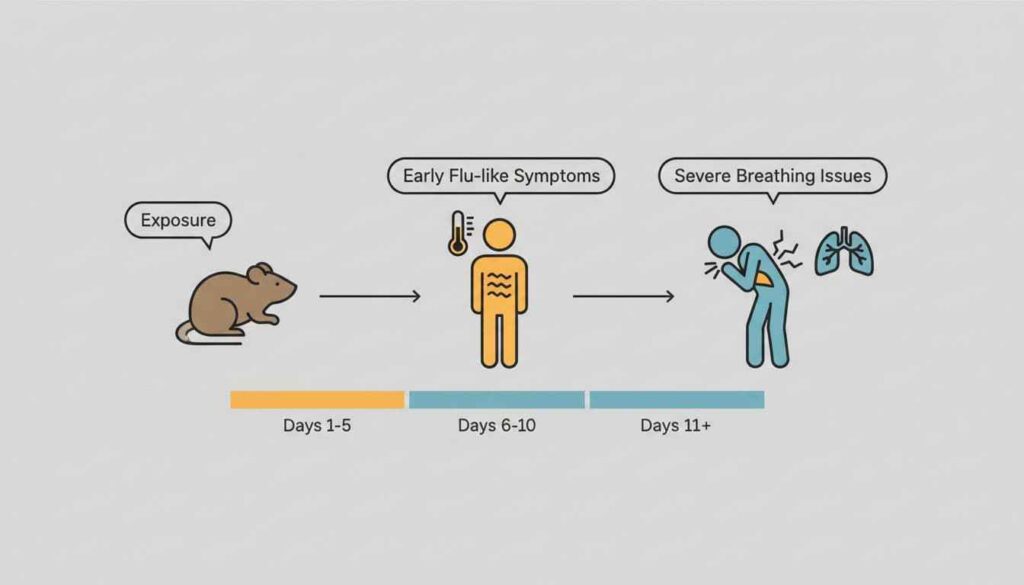
What happens when the illness becomes more serious
Another common search is how fast hantavirus symptoms appear once they worsen. The answer is unsettling: the shift from fever and aches to lung symptoms can happen fast, sometimes within 24 hours after the severe stage begins.
People may develop a dry cough, chest tightness, shortness of breath, and a rapid heartbeat. If you are asking how long hantavirus symptoms last, the key point is not the total length, but how quickly the dangerous stage can arrive.
Hantavirus symptoms in humans, adults, and children
Hantavirus symptoms in humans usually follow the same broad pattern across age groups. The symptoms of hantavirus in adults often begin with fever, body aches, stomach upset, and deep fatigue.
A review of hantavirus symptoms in child cases shows a similar start. These hantavirus disease symptoms, along with other hantavirus infection symptoms, do not become harmless because the patient is young. In plain terms, hantavirus signs and symptoms may look mild at first in both adults and kids. Across strains, hantavirus symptoms often overlap in this early stage.
What adults and children may have in common
Both adults and children can begin with fever, muscle pain, headache, and exhaustion. If the illness worsens, both can then develop cough or breathing trouble.
In the United States, most reported cases are in adults, but children can still get sick. Because of that, any flu-like illness after rodent exposure deserves prompt attention.
Signs that should prompt a doctor visit right away
Do not wait if symptoms are getting worse fast. Seek medical care quickly for:
- shortness of breath or fast breathing
- Chest pressure or a feeling of tightness in the chest
- Repeated vomiting or diarrhea with signs of dehydration
- severe weakness, dizziness, or fainting
- flu-like illness after recent rodent exposure
Hantavirus pulmonary syndrome symptoms (severe stage)
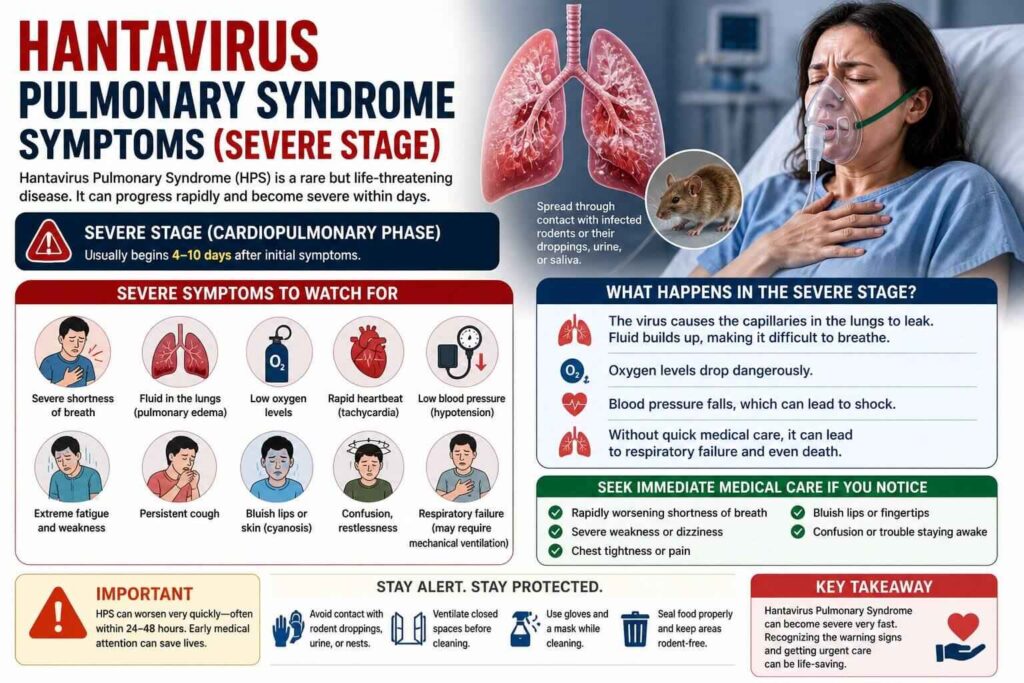
When the illness reaches the lungs, doctors watch for hantavirus pulmonary syndrome symptoms such as dry cough, shortness of breath, chest tightness, and rapid breathing. These hantavirus pulmonary symptoms usually appear after the earlier fever and muscle-ache phase.
Medical guidance treats hantavirus pulmonary syndrome HPS symptoms as an emergency. The CDC brief on HPS explains that early treatment improves the chance of recovery.
Breathing symptoms that signal an emergency
Breathing trouble is the clearest danger sign. A person may feel as if they cannot get enough air, even while sitting still.
Chest discomfort, a racing heart, and fast worsening over hours are also red flags. This stage needs urgent hospital care.
Why is the severe stage so dangerous?
The lungs can begin to fill with fluid, which makes it hard to get oxygen into the blood. Blood pressure may drop, and shock can follow.
That is why this disease becomes life-threatening so quickly. The MedlinePlus entry on hantavirus also notes that breathing problems can intensify within 1 to 2 days.
Hantavirus symptoms overview
A quick hantavirus symptoms overview is simple: watch for fever, hard muscle aches, chills, headache, exhaustion, and stomach upset after rodent exposure, then treat any cough or shortness of breath as urgent. Recent 2026 cases in New Mexico and California are a reminder that this illness still appears in the western United States, even during routine work and home cleanup.
Safe cleanup and exposure prevention habits
Air out closed spaces for at least 30 minutes before cleaning. Do not sweep or vacuum dry droppings. Wet contaminated areas first with disinfectant, wear gloves, and use a proper mask when the setting calls for it.

When to get medical help and what to tell the doctor
Tell the doctor about any recent rodent exposure, when it happened, and when symptoms started. Also mention if you cleaned droppings, disturbed a nest, or were in a dusty enclosed space.
That detail can speed up the right testing and treatment. The CDC clinical overview stresses that exposure history is a key clue.
Conclusion
Hantavirus often begins with what seems like a bad flu. The two clues that matter most are recent rodent exposure and symptoms that start to worsen quickly.
Fever, big muscle aches, and fatigue can come first, then breathing symptoms may follow with little warning. Staying alert early and getting care before the severe stage starts can make a real difference.
FAQsHow Financial Wellness Programs for Employees Support Less Stress and More Stability at WorkHow Financial Wellness Programs for Employees Support Less Stress and More Stability at WorkHow Financial Wellness Programs for Employees Support Less Stress and More Stability at Work
What are hantavirus symptoms?
Hantavirus symptoms usually start with fever, severe tiredness, muscle aches, and headache. Many people also develop chills, nausea, vomiting, or stomach pain in the early stage.
What are the early hantavirus symptoms?
Early hantavirus symptoms often feel like the flu. Common early signs include fever, fatigue, muscle pain, headache, and sometimes sore throat or dizziness.
When do hantavirus symptoms start after exposure?
Hantavirus symptoms typically start 1 to 8 weeks after exposure, most often around 2 to 3 weeks. The delay makes it hard to connect symptoms with rodent contact.
How fast do hantavirus symptoms appear once they begin?
Once symptoms start, they can worsen quickly. Early flu-like signs may develop into breathing problems within a few days in severe cases.
What are hantavirus symptoms in humans?
In humans, hantavirus infection usually begins with symptoms like fever, muscle pain, fatigue, headache, and nausea. In more severe cases, it can progress to breathing problems.
Are hantavirus symptoms different in adults and children?
Symptoms in adults and children are similar. Both may experience fever, body aches, tiredness, and stomach issues. Severe cases can lead to breathing problems in both groups.
What is hantavirus pulmonary syndrome?
Hantavirus pulmonary syndrome is the severe stage of infection. It affects the lungs and causes shortness of breath, chest tightness, rapid breathing, and can become life-threatening.
How long do hantavirus symptoms last?
The early phase may last a few days, but the illness can progress quickly after that. Severe symptoms can develop rapidly and require urgent medical care.
Can hantavirus cause a sore throat?
Yes, a sore throat can appear in some cases, but it is not the main symptom. It usually occurs along with other flu-like signs such as fever and muscle pain.
What are the signs and symptoms of hantavirus infection?
Hantavirus infection usually starts with flu-like signs such as fever, tiredness, muscle aches, headache, and nausea. In more serious cases, it can progress to breathing problems like coughing and shortness of breath.


