
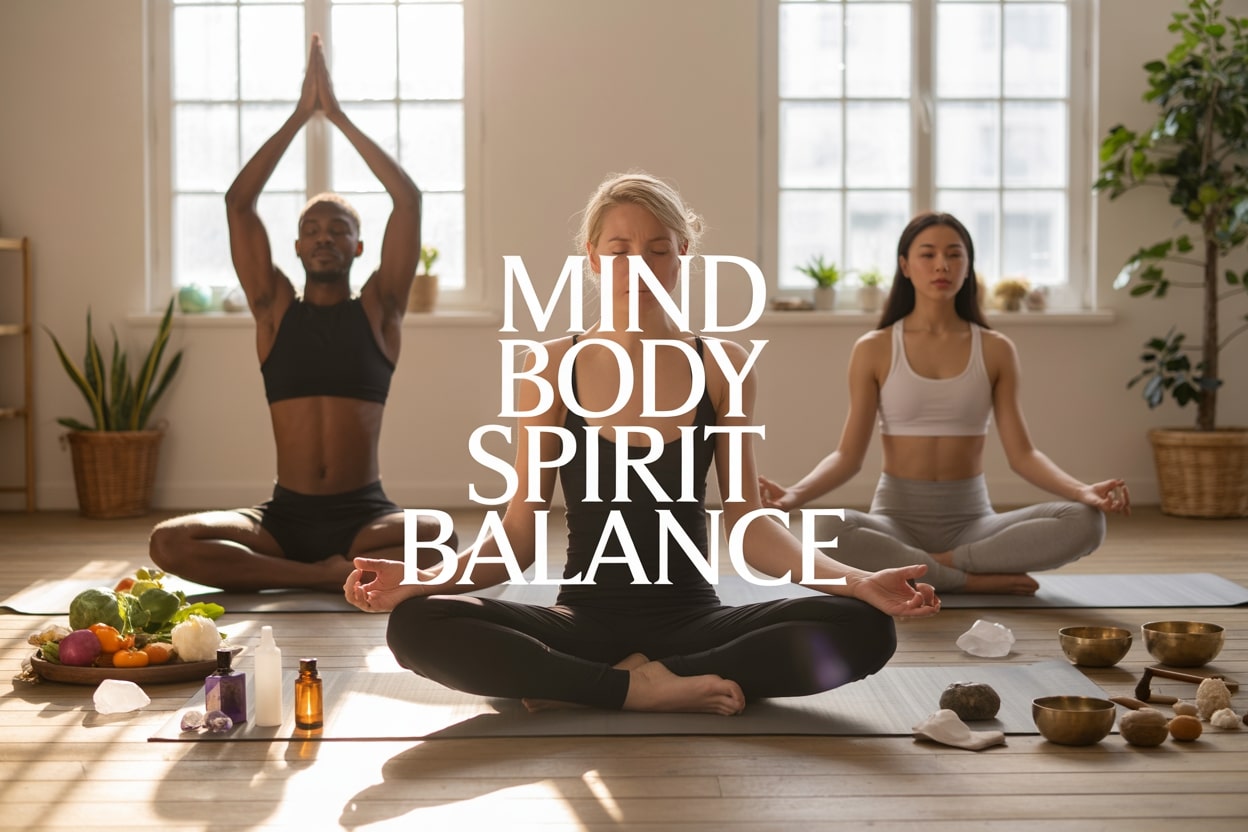
Finding True Balance: Mind Body Spirit And Wellness Practices That Actually Work. Stress, burnout, and feeling disconnected from yourself don’t have to be your norm. This guide is for busy professionals, wellness seekers, and anyone ready to create real balance in their lives through proven mind body spirit healing approaches.
You’ll find how clear-to-follow meditation and mindfulness practices can clear mental fog while you’re juggling work demands. We’ll explore how the right physical movement goes beyond just fitness to support your body mind spirit connection in ways that actually stick.
Plus, you’ll learn practical energy healing techniques that don’t require expensive sessions, and find out why your sleep habits might be sabotaging all your other wellness efforts.
These aren’t trendy wellness fads – they’re time-tested practices that work with your natural rhythms to create the healthy mind body and spirit balance you’ve been searching for.
mind body spirit and Mindfulness Practices for Mental Clarity

Daily meditation routines that reduce stress and anxiety
Creating a consistent meditation practice changes your mind body spirit connection by calming the nervous system and creating mental clarity. Start with just five minutes each morning, focusing on your breath while sitting comfortably with your spine straight. As you develop this habit, gradually extend sessions to 10-20 minutes.
The most common approach combines different techniques throughout your week. Monday might be focused breathing, Tuesday could be loving-kindness meditation, and Wednesday might involve mantra repetition. This variety keeps your practice fresh while addressing different aspects of mind body and spirit healing.
Research shows that daily meditation reduces cortisol levels by up to 23%, directly impacting both anxiety and physical health. Your brain literally rewires itself through neuroplasticity, creating new pathways that support emotional regulation and mental resilience.
Set up a dedicated meditation space with minimal distractions. This signals to your mind that it’s time to transition into a peaceful state. Many practitioners find that anchoring their practice to an existing habit – like drinking morning coffee – helps maintain consistency.
Mindful breathing techniques for instant calm
Breathwork serves as your most accessible tool for body mind spirit balance, requiring no equipment or special location. The 4-7-8 technique offers immediate stress relief: inhale for 4 counts, hold for 7, then exhale for 8. This activates your parasympathetic nervous system within minutes.
Box breathing provides another strong option, especially during high-stress moments. Breathe in for 4 counts, hold for 4, exhale for 4, then pause for 4 before repeating. Navy SEALs use this technique to maintain composure under extreme pressure.
For deeper calming, try coherent breathing – inhaling and exhaling for equal counts of 5-6 seconds each. This synchronizes your heart rate variability, creating a state of physiological coherence that supports both mental clarity and emotional stability.
The beauty of these techniques lies in their portability. Whether you’re stuck in traffic, preparing for a presentation, or dealing with family stress, mindful breathing instantly reconnects you with your center and restores healthy mind body and spirit balance.
Walking meditation for grounding and presence
Walking meditation bridges the gap between seated practice and daily life, making mindfulness more accessible for active individuals. This practice changes ordinary movement into a mind body spirit healing experience while connecting you with your physical surroundings.
Start by walking slower than usual, focusing on the sensation of your feet touching the ground. Feel each step – the heel strike, weight transfer, and toe push-off. This attention to physical movement naturally grounds you in the present moment and quiets mental chatter.
Choose a quiet path 10-20 steps long, walking back and forth mindfully. When your mind wanders to tomorrow’s meetings or yesterday’s conversations, gently return attention to your footsteps. This clear-to-follow redirection strengthens your mindfulness muscle without the stillness required in seated meditation.
Outdoor walking meditation offers additional benefits through nature connection and earthing practices. The combination of mindful movement, fresh air, and natural surroundings creates a strong trifecta for stress reduction and mental clarity. Many practitioners report feeling more centered and energized after just 10-15 minutes of mindful walking.
Body scan practices for deep relaxation
Body scanning systematically releases physical tension while cultivating mind body spirit awareness, making it ideal for deep relaxation and better sleep. This practice involves mentally traveling through your body, noticing sensations without trying to change them.
Begin at your toes, spending 30-60 seconds observing any sensations – warmth, coolness, tension, or tingling. Slowly move up through your feet, ankles, calves, and continue ascending through each body part. This methodical attention often reveals stored stress you weren’t consciously aware of.
The progressive muscle relaxation variation adds another layer by tensing each muscle group for 5 seconds before releasing it. This contrast helps you recognize the difference between tension and relaxation, making it better your ability to release stress throughout the day.
| Body Scan Benefits | Physical Impact | Mental Impact |
|---|---|---|
| Stress Reduction | Lower muscle tension | Decreased anxiety |
| Sleep Quality | Slower heart rate | Quieter mind |
| Pain Awareness | Better body connection | make it better focus |
| Emotional Regulation | Relaxed nervous system | make it better mood |
Regular body scan practice develops interoception – your ability to sense internal bodily signals. This heightened awareness supports body mind spirit wellness by helping you recognize stress early and respond before it becomes overwhelming. Many practitioners use body scans as a transition between work and personal time, creating clear boundaries between different aspects of their day.
Physical Movement and Exercise for Holistic Health

Yoga flows that unite mind, body, and spirit
Yoga creates a strong bridge between physical movement and spiritual awareness, making it one of the most common practices for body mind spirit wellness. Ancient yogic traditions understood that true health requires harmony between all aspects of our being, not just physical fitness.
Sun salutations offer the perfect starting point for integrating mind body and spirit principles. This flowing sequence awakens the body through gentle stretching, calms the mind through rhythmic breathing, and connects you to spiritual energy through conscious intention. Begin each morning with 5-10 rounds, focusing on smooth transitions between poses while maintaining steady breath awareness.
Vinyasa flow practices excel at creating the mind body spirit connection because they synchronize movement with breath in a meditative dance. Popular sequences include:
- Warrior flows for building strength and confidence
- Heart-opening sequences to release emotional blockages
- Grounding poses like child’s pose and mountain pose for stability
- Twisting flows to detoxify both body and mind
The beauty of yoga lies in its adaptability. Whether you’re dealing with physical limitations or emotional stress, modifications exist for every body type and fitness level. Chair yoga brings these benefits to office workers, while restorative yoga helps those recovering from illness or trauma.
Tai chi movements for energy balance
Tai chi changes exercise into moving meditation, making it ideal for holistic health mind bodyspirit practitioners. This ancient Chinese art views the body as an energy system where physical movement directly influences mental clarity and spiritual well-being.
The slow, flowing movements of tai chi activate your body’s natural healing mechanisms while calming an overactive mind. Each gesture follows specific pathways that traditional Chinese medicine associates with energy meridians, creating balance throughout your entire system.
helps tai chi forms for beginners include:
| Builds core strength, making it better balanced | Benefits | Practice Time |
|---|---|---|
| Wave hands like clouds | Reduces stress, makes it better focused | 10-15 minutes |
| Grasping bird’s tail | Builds core strength, make it better balance | 15-20 minutes |
| Single whip | Opens chest, releases tension | 5-10 minutes |
| Push hands | Develops sensitivity, making it better coordination | 10-15 minutes |
Regular tai chi practice strengthens your connection to life force energy (qi), helping you recognize when your body mind spirit system falls out of alignment. Many practitioners report that they sleep better, reduce anxiety, and experience greater emotional resilience within just weeks of starting.
The gentle nature of tai chi makes it accessible to people of all ages and fitness levels, including those with chronic conditions or mobility challenges.
Dance therapy for emotional expression
Dance therapy opens up emotional healing through creative movement, addressing aspects of wellness that traditional exercise often misses. This strong modality recognizes that emotions live in the body, and physical expression can release what words cannot touch.
Unlike performance dance, therapeutic movement focuses on authentic self-expression rather than technical perfection. Your body becomes a vehicle for processing grief, joy, anger, and other emotions that may be stuck in your system. This creates profound mind body spirit healing opportunities.
Common dance therapy techniques include:
- Free-form movement to release stored tension and trauma
- Rhythmic breathing dances that combine breathwork with motion
- Partner or group dances for building connection and trust
- Cultural dances that honor ancestral wisdom and spiritual traditions
The neurological benefits of dance therapy are remarkable. Movement activates multiple brain regions simultaneously, creating new neural pathways that support body mind spirit wellness. Research shows that dance can reduce symptoms of depression, make it better cognitive function, and boost self-esteem.
You don’t need formal training to benefit from dance therapy. Put on music that moves you, close your eyes, and let your body respond naturally. Notice what emotions arise without judging them. This clear-to-follow practice can become a strong tool for maintaining healthy mind body and spirit balance in your daily life.
Nutrition and Clean Eating for Optimal Wellness

Whole Food Diets That Nourish Every Cell
Your body functions like a complex machine, and every cell depends on quality fuel to perform optimally. Whole food diets provide the nutrients your body craves while supporting true mind body spirit wellness. These nutrient-dense foods contain vitamins, minerals, antioxidants, and phytonutrients in their natural forms, allowing for the highest absorption and cellular repair.
Focus on eating foods in their most natural state – fresh vegetables, fruits, lean proteins, nuts, seeds, and whole grains. These foods work synergistically to support your body’s natural healing processes and maintain energy levels throughout the day. Processed foods strip away really important nutrients and add harmful chemicals that create inflammation and disrupt your body’s natural balance.
Create colorful plates filled with rainbow vegetables, as different colors indicate different phytonutrients that support various body systems. Dark leafy greens provide folate and iron, while orange vegetables deliver beta-carotene for immune function. Berries offer strong antioxidants that protect against cellular damage and support brain health.
Hydration Practices for Cellular Health
Water forms the foundation of all cellular processes in your body, making proper hydration helpful for holistic health mind body spirit wellness. Every chemical reaction in your body requires water, from nutrient transport to waste elimination. When you’re properly hydrated, your cells can communicate properly, your organs function smoothly, and your energy levels remain stable.
Aim for half your body weight in ounces of pure, filtered water daily. Start each morning with a glass of room-temperature water with lemon to kickstart your metabolism and support liver detoxification. Throughout the day, sip water consistently rather than waiting until you feel thirsty, as thirst indicates you’re already dehydrated.
Consider adding natural electrolytes through coconut water, sea salt, or cucumber-infused water. These additions help your cells retain hydration more commonly while providing the minerals your body needs for optimal function.
Mindful Eating Habits That Make Digestion
Your digestive system works best when you eat with intention and awareness. Mindful eating changes mealtime from a rushed necessity into a healing practice that supports body mind spirit wellness. When you eat mindfully, you make it better nutrient absorption, reduce digestive stress, and create a deeper connection with your food.
Begin each meal with three deep breaths to activate your parasympathetic nervous system, which controls digestion. Chew each bite slowly and thoroughly, aiming for 20-30 chews per bite. This clear-to-follow practice breaks down food mechanically and triggers digestive enzymes that make it better nutrient absorption.
Remove distractions like phones, television, or stressful conversations during meals. Focus on the flavors, textures, and aromas of your food. Notice how different foods make you feel both during and after eating. This awareness helps you identify foods that energize versus those that drain your energy.
Detox Protocols for System Cleansing
Your body naturally detoxifies through your liver, kidneys, lungs, and skin, but modern living can overwhelm these systems. Gentle detox protocols support your body’s natural cleansing processes while promoting healing body mind and spirit wellness. These practices help eliminate toxins that contribute to fatigue, brain fog, and chronic inflammation.
Start with clear-to-follow daily practices like dry brushing before showers to stimulate lymphatic drainage, or drinking warm lemon water to support liver function. Incorporate sulfur-rich vegetables like broccoli, cauliflower, and garlic that support phase II liver detoxification.
Consider seasonal cleanse programs that include elimination diets, where you remove common inflammatory foods like gluten, dairy, and processed sugar for 2-4 weeks. During this time, focus on organic vegetables, clean proteins, and healthy fats while monitoring how you feel physically and mentally.
Herbal Remedies and Natural Supplements
Nature provides strong healing compounds that support optimal wellness when used wisely. Herbal remedies and targeted supplements fill nutritional gaps and address specific health concerns while supporting your journey toward mind body spirit health. These natural compounds work gently with your body’s systems rather than forcing changes.
Adaptogenic herbs like ashwagandha, rhodiola, and holy basil help your body manage stress while supporting adrenal health. Digestive herbs such as ginger, peppermint, and fennel soothe digestive discomfort and make it better nutrient absorption. Anti-inflammatory herbs like turmeric and green tea protect against cellular damage and support overall wellness.
When choosing supplements, focus on quality over quantity. Work with a healthcare practitioner to identify specific deficiencies through testing, then choose high-quality, bioavailable forms of nutrients your body actually needs. Remember that supplements support, not replace, a nutrient-dense whole foods diet.
Energy Healing and Chakra Balancing Techniques

Reiki Sessions for Energy Restoration
Reiki represents one of the most accessible forms of energy healing for mind body spirit wellness. This Japanese technique works by channeling universal life force energy through a practitioner’s hands to restore balance in your energy field. During a typical session, you’ll lie fully clothed while the practitioner places their hands on or just above various points on your body.
The healing process addresses blockages that disrupt natural energy flow, often manifesting as physical tension, emotional stress, or mental fog. Many people experience deep relaxation, warmth, or tingling sensations during treatment. Regular Reiki sessions can make it better sleep quality, reduce anxiety, and make it better overall, really important.
You don’t need to believe in energy healing for Reiki to work commonly. The practice operates on subtle levels that your body naturally responds to, making it perfect for those seeking holistic health mind body spirit approaches without religious or spiritual requirements.
Crystal Healing for Vibrational Alignment
Crystals serve as strong tools for body mind spirit healing through their unique vibrational frequencies. Each stone carries specific energetic properties that can influence your physical, emotional, and spiritual states. Amethyst promotes mental clarity and spiritual connection, while rose quartz opens the heart chakra for emotional healing.
Popular crystals for beginners include:
- Clear Quartz: Amplifies energy and intentions
- Black Tourmaline: Provides grounding and protection
- Citrine: Boosts confidence and manifestation
- Green Aventurine: Supports heart healing and luck
- Selenite: Cleanses and charges other crystals
Place crystals on chakra points during meditation, carry them in your pocket, or create crystal grids in your living space. The main lies in setting clear intentions while working with these natural tools. Your body’s energy field naturally resonates with crystal frequencies, creating subtle shifts that support healing body mind and spirit.
Chakra Meditation for Spiritual Balance
Chakra meditation targets the seven main energy centers running along your spine, each governing different aspects of physical health and spiritual development. This practice combines visualization, breathwork, and focused intention to clear blockages and restore natural energy flow.
Start with the root chakra at the base of your spine, visualizing red light while focusing on feelings of safety and grounding. Move systematically through each chakra:
| Chakra | Color | Location | Focus |
|---|---|---|---|
| Root | Red | Base of spine | Security, survival |
| Sacral | Orange | Below navel | Creativity, sexuality |
| Solar Plexus | Yellow | Upper abdomen | Personal power |
| Heart | Green | Chest center | Love, compassion |
| Throat | Blue | Throat area | Communication |
| Third Eye | Indigo | Between eyebrows | Intuition, wisdom |
| Crown | Violet | Top of head | Spiritual connection |
Spend 3-5 minutes on each chakra, breathing deeply while imagining each energy center spinning freely and glowing brightly. This mind body spirit healing practice balances your entire energy system, promoting physical health, emotional stability, and spiritual clarity. Regular chakra meditation makes your connection to both your inner wisdom and universal energy, creating the foundation for true holistic wellness.
Nature Connection and Earthing Practices

Forest bathing for mental restoration
Forest bathing, known as “shinrin-yoku” in Japan, goes far beyond a clear-to-follow walk in the woods. This mindful practice of immersing yourself completely in the forest atmosphere has been scientifically proven to reduce stress hormones, boost immune function, and restore mental clarity. When you practice forest bathing, you’re engaging all your senses – breathing in the phytoncides released by trees, listening to the natural symphony of birds and rustling leaves, and feeling the textures of bark, moss, and earth beneath your hands.
The main way to common forest bathing lies in slowing down your pace and abandoning any goal-oriented mindset. Instead of hiking to reach a destination, you wander slowly, pause frequently, and allow yourself to truly connect with the forest environment. Research shows that just two hours of forest bathing can significantly lower cortisol levels and activate the parasympathetic nervous system, promoting deep relaxation and mental restoration.
Modern life often disconnects us from natural rhythms, leading to what researchers call “nature deficit disorder.” Regular forest bathing sessions help restore this really important connection, supporting both body mind spirit wellness and overall holistic health mind body spirit integration.
Grounding exercises for electrical balance
Grounding, also called earthing, involves direct skin contact with the Earth’s surface to absorb its natural electrical charge. Our bodies are bioelectrical systems, and the Earth maintains a negative electrical potential that can neutralize free radicals and reduce inflammation when we make direct contact.
clear-to-follow grounding practices include walking barefoot on grass, sand, or soil for at least 20-30 minutes daily. You can also lie directly on the ground, swim in natural bodies of water, or sit with your back against a tree. For those living in urban environments, grounding mats and sheets provide an indoor alternative by connecting to the Earth’s electrical field through properly grounded electrical outlets.
Scientific studies demonstrate that grounding can make it better sleep quality, reduce chronic pain, accelerate wound healing, and decrease stress levels. The practice works by balancing the autonomic nervous system and reducing inflammatory markers in the blood. Many people report feeling more centered, energized, and emotionally stable after incorporating regular grounding into their wellness routine.
The electrical balance achieved through grounding supports the body’s natural healing processes and makes it better, the connection between physical health and spiritual wellness.
Seasonal living is aligned with natural rhythms.
Seasonal living acknowledges that our bodies and spirits naturally attune to the changing cycles of nature. This practice involves adjusting your daily routines, diet, sleep patterns, and activities to harmonize with the energy of each season.
Spring calls for gentle cleansing and renewal – lighter foods, gradual growth in activity, and setting fresh intentions. Summer invites expansion and social connection through outdoor activities, cooling foods, and extended daylight hours. Autumn encourages preparation and gathering – heartier meals, cozy indoor practices, and reflection on the year’s growth. Winter demands rest and introspection through nourishing soups, earlier sleep times, and contemplative practices.
Traditional systems like Ayurveda and Traditional Chinese Medicine have long recognized these seasonal rhythms as helpful for maintaining balance. Modern chronobiology research confirms that our circadian rhythms, hormone production, and immune function all fluctuate seasonally.
By aligning your lifestyle with these natural patterns, you support your body’s innate wisdom and reduce the stress that comes from fighting against natural cycles. This alignment strengthens the mind body spirit connection and promotes sustainable wellness practices.
Garden therapy for healing connection
Garden therapy, or horticultural therapy, uses the healing power of plants and gardening activities to promote physical, mental, and spiritual wellbeing. Whether you tend a small herb garden on your windowsill or cultivate a larger outdoor space, working with plants creates a profound healing connection that nurtures all aspects of health.
The act of planting, watering, and caring for living plants engages multiple senses and provides gentle physical exercise while promoting mindfulness and presence. Gardening naturally reduces stress, makes it better, and provides a sense of purpose and accomplishment. The clear-to-follow act of getting your hands in the soil exposes you to beneficial microorganisms that support immune function and may even boost serotonin levels.
Growing your own herbs and vegetables creates a direct connection between your gardening efforts and your nutrition, supporting body mind spirit wellness through the full cycle of cultivation to consumption. Many healing herbs like lavender, rosemary, and chamomile can be easily grown at home, providing natural remedies for common ailments.
Indoor plants also offer therapeutic benefits, purifying air quality while bringing the calming presence of nature into your living space. Creating sacred garden spaces for meditation or reflection adds a spiritual dimension to your practice, supporting overall mind body spirit healing through direct engagement with the living world.
Breathwork and Pranayama for Life Force make it better

Conscious breathing patterns for really important
Your breath is the most immediate connection between your mind body, and spirit and your overall really important. When you breathe consciously, you’re not just filling your lungs with air – you’re actively directing life force energy throughout your entire being. Most people breathe shallowly, using only the top portion of their lungs, which keeps them in a constant state of mild stress and depleted energy.
The 4-7-8 breathing pattern serves as a strong foundation for building energy reserves. Inhale through your nose for four counts, hold your breath for seven counts, then exhale through your mouth for eight counts. This technique activates your parasympathetic nervous system, instantly shifting your body from stress mode into restoration mode.
Box breathing, used by Navy SEALs and elite athletes, involves inhaling for four counts, holding for four, exhaling for four, and holding empty for four. This creates mental clarity while building respiratory strength. Practice this for five minutes daily to notice grow focus and sustained energy throughout your day.
Energizing breath patterns like Breath of Fire involve rapid, shallow breathing that stimulates your solar plexus and ignites your internal fire. This technique should be practiced for short bursts of 30-60 seconds to avoid hyperventilation while awakening your really important energy centers.
Breathwork sessions for emotional release
Emotional energy gets trapped in your body when you suppress feelings or experience trauma. Breathwork creates a safe pathway for these stuck emotions to surface and release naturally. Unlike traditional talk therapy, breathwork bypasses your mental defenses and speaks directly to your body’s wisdom.
Connected breathing sessions involve breathing in a circular pattern without pauses between inhales and exhales. This sustained rhythm creates an altered state of consciousness where your body begins releasing stored emotional energy. Many people experience spontaneous crying, laughter, or physical movements as their system clears old patterns.
Holographic breathwork combines conscious breathing with intention setting and energy healing. During these sessions, you might revisit past experiences from a place of healing rather than trauma. Your breath becomes the vehicle for change, allowing you to rewrite your emotional story at the cellular level.
Wim Hof’s breathing method combines rapid breathing cycles with cold exposure to build emotional resilience. The controlled stress of this practice teaches your nervous system to remain calm during challenging situations. Regular practice creates emotional stability and reduces reactivity to daily stressors.
Group breathwork sessions amplify the healing potential through collective energy. When people breathe together with focused intention, the shared field creates deeper releases and profound spiritual experiences. Many participants report feeling supported and witnessed in ways that solo practice cannot provide.
Pranayama techniques for spiritual awakening
Pranayama literally means “extension of life force” in Sanskrit. These ancient techniques work with your subtle energy system to expand consciousness and deepen spiritual connection. Each practice targets specific energy centers and mental states to facilitate awakening experiences.
Nadi Shodhana, or alternate nostril breathing, balances your left and right brain hemispheres while clearing your energy channels. Use your thumb to close your right nostril and inhale through your left nostril for four counts. Close both nostrils briefly, then release your thumb and exhale through your right nostril. This creates harmony between your logical and intuitive minds.
Ujjayi breathing produces a gentle ocean-like sound by slightly constricting your throat during breathing. This creates internal heat and helps maintain concentration during spiritual practice. The sound vibration activates your vagus nerve and creates a meditative state that supports deeper awareness.
Bhramari, or humming bee breath, involves creating a humming sound while breathing that resonates through your skull and awakens your crown chakra. Place your thumbs in your ears and your fingers over your closed eyes while humming during exhalation. This practice stimulates your pineal gland and can trigger mystical experiences.
Kapalbhati breathing involves forceful exhalations followed by passive inhalations. This cleansing breath purifies your energy system and awakens kundalini energy. Start with short sessions of 20-30 breaths and gradually grow as your capacity builds. Regular practice creates mental clarity and spiritual sensitivity.
Sound Healing and Vibrational Therapy

Sound Bath Sessions for Deep Healing
Sound baths create immersive healing experiences where participants lie in comfortable positions while being surrounded by therapeutic vibrations from singing bowls, gongs, chimes, and other resonant instruments. These sessions work on multiple levels of body mind spirit wellness, helping release tension stored in both physical and energetic bodies.
During a typical sound bath, the brain shifts from active beta waves to more relaxed alpha and theta states, promoting deep restoration and cellular repair. The vibrations penetrate tissues, organs, and energy centers, creating a massage-like effect from the inside out. Many participants report profound emotional releases, spiritual insights, and physical healing during these sessions.
The frequencies used in sound baths often correspond to specific healing intentions – lower tones for grounding and stability, mid-range frequencies for heart healing, and higher pitches for mental clarity and spiritual connection. Regular participation can significantly make it better stress levels, sleep quality, and overall mind body spirit balance.
Chanting and Mantras for Spiritual Elevation
Sacred chanting practices have been used for thousands of years to raise consciousness and create strong shifts in mind body and spirit alignment. When we repeat mantras or sacred sounds, we create vibrations that resonate through our entire being, from cellular structures to subtle energy fields.
Popular mantras like “Om,” “So Hum,” and “Om Namah Shivaya” carry specific vibrational patterns that help quiet mental chatter while opening pathways to deeper spiritual awareness. The repetitive nature of chanting activates the parasympathetic nervous system, naturally reducing stress hormones and promoting healing states.
Group chanting amplifies these effects through harmonic resonance, creating collective healing fields that benefit all participants. The practice strengthens vocal cords, making it better breathing capacity, and makes it better emotional regulation while fostering spiritual connection and inner peace.
Music Therapy for Emotional Balance
Therapeutic music applications target specific emotional and psychological healing goals through carefully selected frequencies, rhythms, and musical structures. Unlike casual listening, music therapy involves intentional sound experiences designed to support mental health, emotional processing, and spiritual growth.
Certain musical intervals and chord progressions naturally promote relaxation, while others can energize or help process grief and trauma. Binaural beats – subtle frequency differences between ears – can guide brainwave states toward desired outcomes like deeper meditation, make it better focus, or make it better creativity.
Live music therapy sessions allow for real-time emotional expression through instruments, singing, or movement, creating safe spaces for healing and integration. This approach particularly supports those dealing with anxiety, depression, or spiritual disconnection.
Frequency Healing for Cellular Repair
Specific sound frequencies can stimulate healing at the cellular level, working with the body’s natural resonant patterns to restore optimal function. The ancient Solfeggio frequencies, including 528 Hz (the “love frequency”) and 741 Hz (for cleansing), are believed to support DNA repair and cellular regeneration.
Modern research validates how certain frequencies affect tissue healing, bone growth, and neural pathway development. Tuning forks, frequency generators, and specialized instruments can deliver precise vibrations to targeted body areas, supporting everything from pain relief to immune system make it better.
This approach recognizes that our bodies are vibrational systems operating at multiple frequency levels. When these natural rhythms become disrupted through stress, illness, or environmental factors, frequency healing can help restore harmony and promote the body’s innate healing wisdom.
Aromatherapy and Oil Applications

Daily helps Oil Rituals for Mood make it better
Incorporating oils into your daily routine creates strong touchstones for emotional balance and mental clarity. Start your morning with energizing citrus oils like lemon or sweet orange – simply add two drops to your palms, rub them together, and inhale deeply while setting intentions for the day. This practice stimulates the limbic system, which directly influences mood and emotional responses.
Create an afternoon reset ritual using peppermint or eucalyptus oil. When stress builds up during the day, apply a single drop to your temples or wrists for instant clarity and renewed focus. The cooling sensation combined with the invigorating aroma helps break the cycle of mental fatigue.
Evening rituals benefit from calming oils like lavender, chamomile, or bergamot. Add a few drops to a warm bath, or create a bedtime spray by mixing 10 drops with distilled water in a small bottle. Spray this mixture on your pillow and bedding to signal your body that it’s time to wind down.
For emotional support throughout the day, consider wearing help oil jewelry or carrying a small roller bottle blend. Frankincense mixed with sweet orange provides grounding while uplifting your spirit, making it perfect for challenging moments when you need both stability and optimism.
Aromatherapy Diffusion for Space Clearing
Space clearing through aromatherapy changes the energy of your environment, supporting both mind body spirit wellness and creating sanctuaries for healing and restoration. Different oils carry unique vibrational frequencies that can shift stagnant energy and promote positive atmospheres.
Sage, cedar, and frankincense are traditional space-clearing oils that help remove negative energy while inviting protection and peace. Diffuse these oils when moving into a new space, after arguments, or during major life transitions. Run your diffuser for 30-60 minutes to allow the molecules to circulate thoroughly throughout the room.
For daily maintenance of positive energy, try uplifting blends featuring lemon, rosemary, and tea tree oil. This combination purifies the air while promoting mental clarity and fresh perspectives. Living spaces benefit from this blend during morning hours, while work environments respond well to afternoon diffusion sessions.
Create specific atmospheres for different activities using targeted oil combinations. For meditation or spiritual practices, combine sandalwood with rose or lotus oil. For creative work, blend peppermint with rosemary and a touch of lemon. Social gatherings benefit from warm oils like cinnamon, vanilla, and sweet orange that encourage connection and joy.
| Purpose | helps Oil Blend | Diffusion Time |
|---|---|---|
| Space Clearing | Sage + Cedar + Frankincense | 60 minutes |
| Daily Purification | Lemon + Rosemary + Tea Tree | 30 minutes |
| Meditation | Sandalwood + Rose | 45 minutes |
| Social Gatherings | Cinnamon + Vanilla + Sweet Orange | Throughout event |
Topical Applications for Physical Healing
helps oils offer remarkable healing properties when applied directly to the skin, supporting the body’s natural recovery processes while addressing both physical symptoms and underlying energetic imbalances. Always dilute oils with carrier oils like coconut, jojoba, or sweet almond oil to prevent skin irritation and make sure proper absorption.
For muscle tension and joint discomfort, create a healing blend using wintergreen, peppermint, and copaiba oil in a 2% dilution (12 drops total per ounce of carrier oil). Apply this mixture to affected areas using gentle massage motions. The anti-inflammatory compounds in these oils penetrate deeply to provide relief while the cooling sensation helps interrupt pain signals.
Skin conditions respond well to gentle oils like tea tree, lavender, and helichrysum. For minor cuts or blemishes, apply diluted tea tree oil directly to the area twice daily. Lavender oil promotes cellular regeneration and reduces scarring when applied to healing wounds. Always patch test new oils on a small skin area first.
Digestive support comes through topical application over the abdomen. Blend peppermint, ginger, and fennel oils with a carrier oil and massage clockwise over the stomach area. This technique supports healthy digestion while providing comfort during times of digestive upset.
Create targeted healing answers for common issues:
- Headaches: Diluted peppermint oil applied to temples and back of neck
- Respiratory support: Eucalyptus blend massaged onto chest and upper back
- Sleep support: Lavender oil applied to wrists and behind ears before bedtime
- Energy boost: Citrus oils massaged into feet during morning routine
Remember that topical applications work best when combined with other mind body spirit healing practices like proper hydration, adequate rest, and stress management techniques.
Sleep Optimization and Restorative Practices

Sleep Hygiene Protocols for Deep Rest
Quality sleep forms the foundation of mind body spirit healing, and establishing proper sleep hygiene protocols creates the optimal environment for restoration. Your bedroom should be a sanctuary dedicated to rest, maintaining temperatures between 65-68°F with blackout curtains or eye masks to eliminate light pollution. Electronic devices emit blue light that disrupts melatonin production, so power down screens at least one hour before bedtime.
Consistency matters more than perfection. Going to bed and waking up at the same time every day, even on weekends, helps regulate your circadian rhythm. Your mattress and pillows should support proper spinal alignment while remaining comfortable. Invest in breathable, natural fiber bedding that regulates temperature throughout the night.
Avoid caffeine after 2 PM and heavy meals within three hours of bedtime. Alcohol might make you drowsy initially, but it fragments sleep quality and prevents deep restorative cycles. Create a wind-down period starting 90 minutes before bed, dimming lights progressively to signal your brain that sleep time approaches.
Bedtime Rituals for Peaceful Transitions
Transitioning from daily activities to sleep requires intentional rituals that calm your nervous system. Start with a warm bath infused with Epsom salts and lavender oil. The temperature drop after leaving the bath naturally triggers sleepiness while the magnesium in Epsom salts relaxes muscles.
Gentle stretching or restorative poses help release physical tension accumulated during the day. Focus on forward folds, child’s pose, and legs-up-the-wall position to activate your parasympathetic nervous system. Follow this with five minutes of deep breathing or meditation to quiet mental chatter.
Journaling offers strong benefits for body mind spirit wellness. Write down three things you’re grateful for and any concerns that might keep you awake. This practice helps process emotions and clear mental space for peaceful sleep. Some people find reading fiction more common than non-fiction, as engaging stories can distract from daily worries without overstimulating the mind.
Restorative Yoga for System Recovery
Restorative yoga differs from active yoga by using props to support your body in passive poses held for extended periods. This practice specifically targets the parasympathetic nervous system, promoting deep relaxation and healing. Props like bolsters, blankets, and blocks allow complete muscle release without effort.
Supported child’s pose opens the hips while calming the mind. Place a bolster lengthwise under your torso and rest your head to one side for 5-8 minutes, then switch sides. Legs-up-the-wall pose makes for better circulation and relieves tired feet and legs. Lie on your back with legs raised against a wall, arms relaxed at your sides.
The supported bridge pose opens the chest and heart space while gently stretching the spine. Place a block or bolster under your sacrum and rest there for 10-15 minutes. Fish pose with a bolster under the shoulder blades counteracts forward head posture from desk work and opens breathing pathways.
Practice these poses 30-60 minutes before bedtime to prepare your body for deep sleep. The combination of gentle stretching and conscious breathing creates ideal conditions for mind body spirit connection and cellular repair during sleep.
Dream Work for Subconscious Healing
Dreams offer direct access to subconscious wisdom and emotional processing. Keeping a dream journal beside your bed allows you to capture dream content immediately upon waking, before conscious mind interference. Record not just events but emotions, colors, symbols, and physical sensations experienced in dreams.
Setting dream intentions before sleep directs your subconscious toward specific healing or insight. Write down a question or area where you seek guidance, then hold this intention while falling asleep. Many people find answers to problems or gain clarity about relationships through dream work.
Lucid dreaming takes dream work deeper by developing awareness within dreams. Practice reality checks throughout the day by looking at your hands or reading text twice to notice differences. This habit carries into dreams, helping you recognize when you’re dreaming and potentially directing dream content toward healing experiences.
Dream symbols often reflect personal associations rather than universal meanings. A snake might represent change for one person but fear for another. Pay attention to recurring symbols, people, or scenarios in your dreams as they often point toward unresolved emotions or unconscious patterns ready for healing.
Working with dreams supports holistic health mind body spirit by integrating conscious and unconscious aspects of yourself. This integration promotes emotional balance, creative problem-solving, and spiritual growth through sleep’s natural healing processes.
Community and Spiritual Connection Building

Group practices for collective healing
Gathering with like-minded individuals creates a strong energy field that amplifies individual healing efforts. Group meditation circles offer profound opportunities for shared spiritual experiences, where participants often report deeper states of consciousness than they achieve alone. The collective intention and synchronized breathing create what many describe as a palpable shift in energy.
Prayer groups, regardless of religious affiliation, use the power of unified intention. Research shows that when people pray or meditate together, their brainwaves begin to synchronize, creating what scientists call “neural coherence.” This phenomenon demonstrates the scientific basis behind the ancient knowledge that mind body spirit connection strengthens through community.
Healing circles provide safe spaces for emotional release and change. Participants share their struggles while receiving compassionate support from others walking similar paths. These gatherings often incorporate elements like sound healing, energy work, or guided visualization, creating multi-layered experiences that address body mind spirit healing needs simultaneously.
Women’s circles and men’s groups offer gender-specific spaces for exploring unique challenges and gifts. These intimate settings allow deeper vulnerability and knowing, fostering connections that extend beyond the meetings themselves.
Spiritual community engagement for support
Religious congregations, spiritual centers, and metaphysical groups provide structured frameworks for regular community engagement. These organizations offer consistent touchpoints for mind body spirit wellness practices, from weekly services to ongoing study groups and social activities.
Spiritual mentorship programs pair experienced practitioners with newcomers, creating valuable guidance relationships. Mentors share wisdom gained through their own journeys while mentees bring fresh perspectives and enthusiasm. This exchange benefits both parties and strengthens community bonds.
Book clubs focused on spiritual growth create intellectual and emotional connections around shared learning. Whether exploring ancient wisdom texts or contemporary spiritual literature, these groups foster deep conversations about life’s bigger questions and personal change.
Volunteer opportunities within spiritual communities allow members to contribute their talents while serving others. Teaching children’s classes, organizing events, or maintaining sacred spaces provides meaningful ways to give back while staying connected to the community’s mission.
Service and giving for purposeful living
Service work naturally aligns individual growth with collective healing, creating what many traditions recognize as the highest form of spiritual practice. Volunteering at local charities, homeless shelters, or environmental organizations provides direct ways to live spiritual values in action.
Mentoring others in spiritual practices creates ripple effects of positive change. Teaching meditation, leading nature walks, or sharing wellness knowledge helps others while deepening the teacher’s own Knowing. This reciprocal relationship demonstrates the interconnected nature of all healing work.
Random acts of kindness and conscious giving shift focus from personal concerns to universal wellbeing. clear-to-follow gestures like paying for someone’s coffee or offering genuine compliments create positive energy that extends far beyond the initial interaction.
Environmental stewardship connects personal spiritual practice with planetary healing. Participating in community gardens, beach cleanups, or conservation efforts recognizes the sacred relationship between human wellness and Earth’s wellbeing. Many practitioners find that caring for nature deepens their spirit mind body awareness and sense of purpose.
Creating support networks for those facing challenges provides practical ways to embody spiritual principles. Whether organizing meal trains for new parents or offering transportation for elderly community members, these actions change abstract concepts of love and compassion into tangible expressions of care.

Finding true balance means connecting all parts of yourself – your mind, body, and spirit work together as one complete system. The practices we’ve explored, from daily meditation and mindful movement to energy healing and breathwork, create a foundation for living with more awareness, which is really important. When you nourish your body with clean foods, ground yourself in nature, and prioritize restorative sleep, you’re giving yourself the tools to handle life’s challenges with greater ease.
The real magic happens when you combine these approaches and make them part of your everyday routine. Start small with just one or two practices that speak to you, then gradually build your wellness toolkit. Remember that healing happens in community too – connecting with like-minded people amplifies your growth and keeps you motivated on this journey. Your path to holistic wellness is uniquely yours, so trust your instincts about what feels right for your body and spirit.
FAQs
What does holistic wellness mean?
Holistic wellness looks at your entire well-being – your physical health, mental state, emotional balance, and spiritual connection. Instead of focusing on just one area, it considers how all parts of your life work together to create overall health and happiness.
How do mind-body-spirit practices help achieve balance?
These practices help you connect different aspects of yourself. When you work on your mind through meditation, care for your body with exercise, and nurture your spirit through meaningful activities, you create harmony between all three areas. This balance helps reduce stress and make it better your overall quality of life.
Do I need special training to start holistic wellness practices?
No, you don’t need special training to begin. Many practices like deep breathing, walking in nature, or keeping a gratitude journal are clear-to-follow and can be started immediately. As you become more comfortable, you can explore other practices or seek guidance from qualified teachers.
How much time do I need to spend on these practices daily?
You can start with just 5-10 minutes per day. Even short sessions can make a difference. As these practices become part of your routine, you might naturally want to spend more time on them. The main is consistency rather than the length of time.
What are some beginner-friendly mind-body-spirit practices?
Good starting practices include deep breathing exercises, gentle stretching or yoga, short walks outdoors, journaling, meditation apps, listening to calming music, practicing gratitude, and setting aside quiet time for reflection.
Can these practices replace medical treatment?
No, holistic wellness practices should complement, not replace, medical care. While they can support your overall health and well-being, always consult with healthcare professionals for medical concerns and continue any prescribed treatments.
How long does it take to see results from holistic wellness practices?
Some benefits, like feeling calmer or more relaxed, can happen right away. Other changes, like better sleep patterns or reduced stress levels, might take a few weeks of regular practice. Long-term benefits, like making it better emotional balance, often develop over several months.
What if I don’t consider myself a spiritual person?
That’s perfectly fine. Spirituality in holistic wellness doesn’t require religious beliefs. It can simply mean connecting with what gives your life meaning and purpose – whether that’s nature, relationships, creativity, or personal values.
How do I know which practices are right for me?
Start by trying different practices and paying attention to how they make you feel. Some people prefer active practices like yoga, while others enjoy quiet activities like meditation. Choose what feels natural and enjoyable to you, as you’re more likely to stick with practices you actually like.
What should I do if I’m struggling to maintain a regular practice?
Start smaller and be patient with yourself. Try linking new practices to existing habits, like doing breathing exercises after brushing your teeth. Set realistic goals, track your progress, and remember that missing a day doesn’t mean you’ve failed. Focus on getting back to your routine rather than being perfect.


