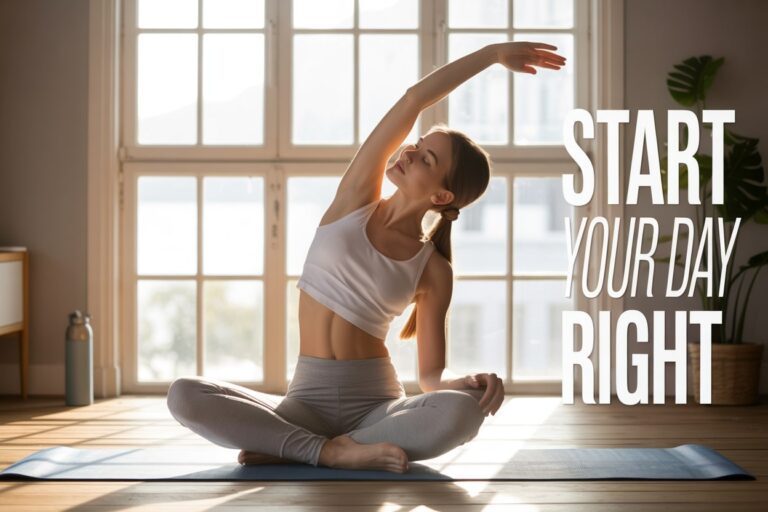
Tight muscles and limited range of motion can make everyday activities feel uncomfortable and challenging. The best yoga stretches for flexibility offer a proven solution for anyone wanting to move more freely and feel better in their body.
This guide is designed for beginners ready to start their flexibility journey at home, active individuals looking to improve their mobility, and anyone experiencing stiffness from sitting too much or repetitive daily movements.
We’ll walk through specific yoga poses that target your legs, hips, back, and arms to address the most common tight spots. You’ll also discover how to build simple routines that combine flexibility with strength and balance training. Plus, we’ll cover quick practices you can do daily to maintain your progress and support long-term comfort in movement.
How Yoga Stretches for Flexibility Improve Mobility, Comfort, and Daily Movement

Does yoga help with flexibility and range of motion
Yoga stretches for flexibility work by gently lengthening muscles, releasing tension in connective tissues, and improving joint mobility through sustained, mindful movements. When you hold yoga positions for flexibility, your muscles gradually adapt by increasing their length and reducing stiffness. This process happens because yoga poses target multiple muscle groups simultaneously while encouraging deep breathing, which helps muscles relax and extend more effectively.
The science behind yoga’s effectiveness lies in how it addresses both muscular and fascial restrictions. Regular practice creates micro-tears in muscle fibers that heal longer than before, while also improving the elasticity of fascia – the connective tissue surrounding muscles. This dual action significantly enhances your range of motion over time.
Unlike passive stretching, yoga poses for flexibility and strength combine mobility work with stability training. This approach creates functional flexibility that translates directly to better movement patterns in daily activities like reaching overhead, bending down, or rotating your torso.
Can yoga help with flexibility and mobility over time
Consistency in yoga practice delivers remarkable improvements in flexibility and mobility, typically showing noticeable changes within 2-4 weeks of regular practice. The key lies in progressive adaptation – your body gradually adjusts to increased demands by developing longer, more elastic muscles and improved joint space.
Long-term practitioners often experience:
- Increased muscle fiber length through regular stretching stimulus
- Improved joint lubrication from gentle movement patterns
- Enhanced neuromuscular coordination that allows deeper, safer stretches
- Better posture leads to reduced compensatory tightness
Research shows that yoga stretches to improve flexibility can increase hamstring flexibility by 10-35% within eight weeks of consistent practice. Hip flexibility improvements often occur even faster, with many people noticing increased range of motion in forward folds and hip openers within the first month.
The progressive nature of yoga means you can start with beginner yoga stretches for flexibility and gradually advance to more challenging poses as your body adapts. This systematic approach prevents injury while maximizing gains.
Is yoga a flexibility exercise or flexibility training
Yoga functions as both a flexibility exercise and a comprehensive flexibility training, making it uniquely effective for improving mobility. As a flexibility exercise, individual yoga poses target specific muscle groups through sustained stretches. As flexibility training, yoga provides a systematic approach that progressively challenges your range of motion while building strength and stability.
The training aspect comes from yoga’s structured progression. Best yoga stretches for flexibility are typically organized in sequences that warm up the body, work through major muscle groups, and cool down appropriately. This methodology ensures safe, effective flexibility development.
Yoga differs from simple stretching because it incorporates:
- Active flexibility through poses that require strength while stretching
- Dynamic movements that improve the functional range of motion
- Breathing techniques that enhance muscle relaxation
- Mind-body awareness that helps you understand your flexibility limits
Yoga vs stretching for flexibility and joint comfort
While both yoga and traditional stretching improve flexibility, yoga offers several advantages for long-term joint comfort and mobility. Traditional stretching typically isolates individual muscles, while yoga poses for flexibility, beginners and advanced practitioners work multiple muscle groups simultaneously, creating balanced flexibility throughout the body.
| Yoga | Traditional Stretching |
|---|---|
| Combines strength and flexibility | Focuses primarily on lengthening |
| Includes breathing techniques | May not emphasize breathing |
| Addresses whole-body patterns | Often targets isolated muscles |
| Builds functional movement | May create passive flexibility only |
| Incorporates mindfulness | Typically mechanical approach |
Yoga stretches for flexibility also emphasize proper alignment, which protects joints while improving range of motion. The mindful approach helps you recognize the difference between productive stretch sensations and potentially harmful overstretching.
For joint comfort specifically, yoga’s gentle approach and emphasis on stability alongside flexibility create lasting relief from stiffness and discomfort.
Will yoga help me become flexible with regular practice
Regular yoga practice absolutely helps you become flexible, regardless of your starting point. Even people who consider themselves inflexible can see significant improvements with consistent daily yoga stretches for flexibility. The key is starting with appropriate poses and gradually progressing as your body adapts.
Beginners should focus on basic yoga stretches for flexibility that target major muscle groups like hamstrings, hips, shoulders, and spine. Simple poses like child’s pose, cat-cow stretches, and gentle twists provide excellent starting points for building flexibility safely.
Expected timeline for flexibility improvements:
- Week 1-2: Reduced muscle tension and easier movement
- Week 3-4: Noticeable increases in range of motion
- Month 2-3: Significant flexibility gains in targeted areas
- Month 4+: Functional flexibility that improves daily activities
Success depends on consistency rather than intensity. Practicing 15-20 minutes of yoga stretches for flexibility, beginners, daily, produces better results than occasional longer sessions. The gentle, progressive nature of yoga makes it sustainable long-term, allowing continuous flexibility improvements over months and years of practice.
Yoga Poses for Flexibility That Support Strength Balance and Body Control

Yoga poses for flexibility and strength for full body support
Building flexibility while maintaining strength creates the perfect foundation for a well-rounded yoga practice. Yoga poses for flexibility and strength work together to develop muscles that can move through their full range of motion while staying stable and controlled. The key lies in holding poses that challenge both your flexibility limits and your muscular endurance.
Warrior III stands out as an exceptional pose for full-body integration. While balancing on one leg, you’re stretching the hip flexors of the standing leg while strengthening the entire posterior chain. Your arms extend forward, creating length through the spine while your core works overtime to maintain stability.
Extended Side Angle Pose offers another powerful combination. The side body stretches deeply while the legs build strength in a wide stance. Your top arm reaches over your head, creating space between the ribs, while your bottom hand supports your weight, engaging the shoulders and arms.
Low Lunge with a twist targets multiple muscle groups simultaneously. The hip flexors of the back leg get a deep stretch while the front leg builds strength. Adding the spinal twist engages your obliques and improves thoracic mobility, making this pose invaluable for yoga exercises for flexibility and strength.
Yoga poses for flexibility beginners with controlled movement
Starting your flexibility journey requires poses that offer clear progression paths and built-in safety mechanisms. Yoga poses for flexibility for beginners should emphasize alignment over depth, allowing your body to adapt gradually to new ranges of motion.
Child’s Pose serves as your home base – a gentle hip flexor stretch that you can modify by widening your knees or extending your arms to one side. This pose teaches you how to breathe into tight areas while maintaining a sense of safety and control.
Seated Forward Fold with bent knees removes the intensity from tight hamstrings while still providing a valuable stretch. Keep your knees soft and focus on hinging from your hips rather than rounding your spine. This approach builds the neural pathways for proper forward folding mechanics.
The supine Figure-Four Stretch allows you to control the intensity by pulling your thigh closer to your chest or backing off as needed. This hip opener works excellently for beginner yoga stretches for flexibility because you can adjust the stretch in real-time without losing your balance.
Cat-Cow stretches teach spinal articulation while building awareness of your back’s natural curves. Moving slowly between these two positions helps you understand how your spine moves and where you might hold tension.
Yoga poses for flexibility and mobility in daily routines
Your daily movement patterns greatly benefit from yoga stretches for flexibility that directly translate to everyday activities. These poses address the common tight spots that develop from sitting, driving, and repetitive motions.
Standing Forward Fold mimics the movement of picking things up from the floor – a motion we do dozens of times daily. Practice this pose regularly to maintain healthy hip hinge patterns and keep your hamstrings and calves supple.
Thoracic extension poses, like Camel Pose or Fish Pose, counteract the forward head posture that develops from computer work. These backbends open the chest and strengthen the upper back muscles, improving your posture throughout the day.
Hip circles in a low lunge position prepare your hips for walking, climbing stairs, and getting in and out of cars. This dynamic movement pattern keeps your hip joints mobile and reduces stiffness that can develop from prolonged sitting.
Ankle circles and calf stretches maintain the mobility needed for walking and running. Many people overlook foot and ankle flexibility, but these joints bear your full body weight with every step.
Yoga poses for shoulder flexibility and upper body comfort
Shoulder mobility directly impacts your quality of life, affecting everything from reaching overhead to sleeping comfortably. Yoga poses for shoulder flexibility target the complex network of muscles and joints that make up your shoulder girdle.
Eagle arms provide an intense stretch for the rhomboids and rear deltoids – muscles that often become tight from poor posture. Lift your elbows as you wrap your arms, creating space between your shoulder blades.
Cow Face arms stretch different parts of your shoulders, depending on which arm is on top. The bottom arm stretches the anterior deltoid and chest, while the top arm targets the triceps and latissimus dorsi. Switch sides to ensure balanced development.
Thread the needle combines shoulder mobility with spinal rotation. Starting in tabletop position, thread one arm under your body while keeping your hips square. This pose releases tension in your upper back while improving thoracic spine mobility.
Doorway chest stretches using yoga props can intensify the stretch safely. Place your forearm against a wall or doorframe and step forward, feeling the stretch across your chest and front deltoid.
Yoga poses for hamstring flexibility and leg balance
Yoga poses for hamstring flexibility require patience and consistent practice, as these large muscle groups often hold significant tension from sitting and athletic activities. Best yoga poses for hamstring flexibility work progressively to lengthen these muscles while maintaining strength and stability.
Standing Hand-to-Big-Toe Pose challenges both hamstring flexibility and balance simultaneously. Start with your knee bent and gradually straighten your leg as your flexibility improves. Use a strap around your foot if reaching your toe feels impossible.
Pyramid Pose offers an intense hamstring stretch while building strength in your standing leg. Keep a micro-bend in your front knee to protect your hamstring attachment at the knee, and focus on hinging from your hips rather than rounding your spine.
Reclining Hand-to-Big-Toe Pose removes the balance challenge, allowing you to focus purely on the hamstring stretch. This pose works excellently for yoga exercises for flexibility legs because you can use a strap to control the intensity while keeping your spine neutral against the floor.
Wide-legged forward fold stretches your hamstrings and adductors simultaneously. Walk your hands forward slowly, maintaining length in your spine. This pose helps develop the flexibility needed for deeper seated poses like Lotus or Bound Angle.
Yoga Stretches for Flexibility for Beginners Starting at Home

Yoga stretches for flexibility for beginners with body awareness
Building body awareness forms the foundation of any successful yoga practice, especially for beginners working on flexibility. Start each session by simply sitting quietly and noticing how your body feels. This isn’t about judging tight spots or limitations – it’s about creating a connection between your mind and body.
Child’s Pose (Balasana) serves as your home base for developing awareness. Kneel on your mat, touch your big toes together, and sit back on your heels. Slowly fold forward, extending your arms in front of you or alongside your body. This gentle position lets you tune into your breathing while creating a mild stretch through your hips, back, and shoulders. Hold for 30 seconds to 2 minutes, breathing deeply and noticing any sensations without trying to force changes.
Cat-Cow Stretch teaches you to move with awareness while improving spinal flexibility. Start on your hands and knees, wrists under shoulders, and knees under hips. As you inhale, arch your back and lift your head (Cow). As you exhale, round your spine toward the ceiling like an angry cat. Move slowly between these positions for 5-8 rounds, paying attention to how each vertebra moves.
Seated Forward Fold develops awareness of your back body and hamstrings. Sit with legs extended, spine tall. Slowly hinge forward from your hips, reaching for your shins, ankles, or feet – wherever feels comfortable. The goal isn’t touching your toes; it’s learning to distinguish between productive stretching sensations and harmful pulling.
Beginner yoga stretches for flexibility and safe range of motion
Safety comes first when starting yoga stretches for flexibility beginners. Your body needs time to adapt, and pushing too hard too fast leads to injury rather than progress. Start with these gentle poses that respect your current range of motion while gradually expanding it.
Mountain Pose (Tadasana) might look simple, but it’s incredibly effective for establishing proper alignment. Stand with feet hip-width apart, weight evenly distributed. Engage your leg muscles, lengthen your spine, and relax your shoulders. This foundational pose teaches you how to find stability before attempting more challenging stretches.
Standing Forward Fold offers a safe way to stretch your hamstrings and back. From Mountain Pose, hinge forward from your hips, letting your arms hang heavy. Bend your knees as much as needed – this isn’t about straight legs. Sway side to side or hold opposite elbows for variety. Stay here for 30 seconds to 1 minute.
Low Lunge safely opens tight hip flexors common from sitting. Step your right foot forward into a lunge position, lowering your left knee to the ground. Keep your hands on your front thigh for support, or place them on blocks beside your front foot. Focus on gently pressing your hips forward rather than forcing depth.
Supine Spinal Twist provides safe spinal rotation while lying down. Lie on your back, draw your right knee to your chest, then cross it over to your left side. Keep your right shoulder grounded and extend your right arm out. This supported position lets you explore twisting without straining your back.
Basic yoga stretches for flexibility used in daily practice
Creating a consistent daily practice with basic poses builds flexibility more effectively than occasional intense sessions. These fundamental stretches work multiple muscle groups and can be done in just 10-15 minutes.
Downward Facing Dog combines strength building with flexibility work. Start on hands and knees, tuck your toes, and lift your hips up and back. Create an inverted V-shape with your body. Bend your knees, pedal your feet, and focus on lengthening your spine rather than straightening your legs immediately. This pose stretches your hamstrings, calves, and shoulders while building arm and core strength.
Cobra Pose gently opens your chest and strengthens your back muscles. Lie face down, place your palms under your shoulders, and press into your hands to lift your chest. Keep your hips grounded and your shoulders relaxed. Start with small lifts and gradually increase as your back flexibility improves.
Thread the Needle provides gentle spinal rotation and shoulder opening. Start on hands and knees, then slide your right arm under your left arm, lowering your right shoulder and ear to the mat. Hold for 30 seconds, then switch sides. This pose counteracts the forward hunching common in daily life.
Happy Baby Pose releases tight hips and lower back. Lie on your back, draw your knees toward your chest, and grab the outsides of your feet. Rock gently side to side or simply hold still, breathing deeply. If you can’t reach your feet, hold your shins or use a strap around your feet.
Yoga workout for flexibility beginners with steady pacing
Pacing matters tremendously when you’re beginning yoga for stretching and flexibility for beginners. Your workout should feel challenging but not overwhelming, building heat gradually and allowing time for your muscles to warm up properly.
Start with 5 minutes of gentle movement to prepare your body. Simple neck rolls, shoulder shrugs, and gentle twisting while seated help increase circulation and prepare your joints for deeper stretching.
Move into Sun Salutation A (modified) for 3-4 rounds. From standing, sweep your arms overhead, fold forward, step back to plank pose (or lower to knees), lower down, lift into cobra, and return to standing. Move slowly, taking 2-3 breaths in each position rather than rushing through the sequence.
Spend 10-12 minutes on floor poses targeting major muscle groups. Include hip openers like Butterfly Pose (sitting with soles of feet together), Seated Pigeon (ankle over opposite knee), and Figure-4 Stretch (lying on back with ankle over knee). Hold each pose for 1-2 minutes, allowing your body time to release gradually.
End with 5 minutes of restorative poses like Legs Up the Wall or Supported Child’s Pose using bolsters or pillows. This cooldown period helps integrate the work you’ve done and leaves you feeling relaxed rather than depleted.
Yoga stretches to improve flexibility without strain
Learning to distinguish between productive sensation and harmful strain prevents injury while maximizing flexibility gains. Your body communicates clearly if you know how to listen.
Use the 70% rule in all poses. If 100% is your absolute maximum stretch, work at about 70% intensity. You should feel a definite sensation but still be able to breathe calmly and hold the pose comfortably for the intended duration.
Breathe as your guide – if your breathing becomes labored or you’re holding your breath, back off slightly. Deep, steady breathing actually helps muscles release and allows you to go deeper safely over time.
Triangle Pose demonstrates this principle beautifully. Stand with feet wide, turn your right foot out, and reach your right hand toward your shin, ankle, or a block. The key isn’t how low you can go – it’s maintaining the length in your spine and ease in your breathing. Use a block under your hand if needed to avoid collapsing over your leg.
Pigeon Prep safely opens tight hips when approached gradually. From downward dog, bring your right knee forward and place it behind your right wrist. Lower your hips toward the floor only as far as comfortable. Use a bolster or pillow under your right hip for support if needed. The stretch should feel intense but manageable, never sharp or painful.
Regular practice with mindful attention to these sensations builds both flexibility and body wisdom, creating a sustainable path toward a greater range of motion and overall comfort in your body.
Targeted Yoga Stretches for Leg Hip Back and Arm Flexibility

Yoga stretches for leg flexibility and lower body mobility
Strong, flexible legs form the foundation for better movement in daily activities like climbing stairs, walking long distances, and maintaining balance. Yoga stretches for leg flexibility target multiple muscle groups simultaneously, creating length and strength throughout your lower body.
Forward Fold (Uttanasana) serves as one of the most effective yoga poses for flexibility targeting your hamstrings, calves, and entire back body. Stand with feet hip-width apart, slowly hinge forward from your hips, and let gravity help deepen the stretch. Hold for 30-60 seconds while breathing deeply.
Low Lunge (Anjaneyasana) opens tight hip flexors while stretching your back leg’s quad and front. Step your right foot forward into a lunge, drop your back knee to the ground, and sink your hips forward. This pose particularly benefits people who sit for long periods.
Pyramid Pose (Parsvottanasana) creates intense hamstring flexibility while improving balance. Step your left foot back about 3-4 feet, keep both legs straight, and fold forward over your front leg. The asymmetrical nature of this pose helps address imbalances between legs.
Yoga stretches for hip flexibility and seated comfort
Hip flexibility directly impacts your comfort when sitting, walking, and sleeping. Tight hips often contribute to lower back pain and restricted movement patterns. Yoga stretches for hip flexibility focus on multiple planes of movement to restore natural mobility.
Pigeon Pose (Eka Pada Rajakapotasana) stands as the gold standard for hip opening. Bring your right shin parallel to the front of your mat, extend your left leg straight back, and fold forward over your front leg. This yoga stretch targets your hip flexors, glutes, and external rotators simultaneously.
Figure Four Stretch provides a gentler alternative for tight hips. Lie on your back, cross your right ankle over your left thigh just above the knee, and pull your left thigh toward your chest. This accessible pose delivers deep hip opening without requiring extreme flexibility.
Bound Angle Pose (Baddha Konasana) opens your inner thighs and groin area. Sit with the soles of your feet together, hold your ankles, and gently fold forward. This seated position makes it perfect for daily practice and helps counteract the effects of prolonged sitting.
Yoga stretches for back flexibility and spinal movement
Yoga stretches for back flexibility address the most common area of tension and stiffness in modern bodies. A flexible spine supports better posture, reduces pain, and improves overall quality of life.
Cat-Cow Pose creates gentle spinal mobility through flexion and extension. Start on hands and knees, alternate between arching your back and rounding your spine. This flowing movement warms up your entire spine and releases tension between vertebrae.
Cobra Pose (Bhujangasana) strengthens your back muscles while creating extension through your spine. Lie face down, place your palms under your shoulders, and lift your chest off the ground. Start small and gradually increase the backbend as your flexibility improves.
Seated Spinal Twist provides rotation, which many people lack in their daily movement patterns. Sit with legs extended, cross your right foot over your left thigh, and twist your torso to the right. Hold your right knee with your left arm and place your right hand behind you for support.
Child’s Pose (Balasana) gently stretches your lower back while providing a calming counter-pose to backbends. Kneel on the ground, touch your big toes together, separate your knees, and fold forward with arms extended.
Yoga arm stretches for shoulder and upper body flexibility
Yoga arm stretches release tension from computer work, carrying bags, and repetitive daily activities. Flexible shoulders and arms improve your ability to reach overhead, carry objects, and maintain good posture.
Eagle Arms (Garudasana arms) stretches the backs of your shoulders and between your shoulder blades. Wrap your right arm under your left, bring your palms together if possible, and lift your elbows while dropping your shoulders away from your ears.
Cow Face Arms (Gomukhasana arms) target different areas of shoulder flexibility. Reach your right arm overhead, bend your elbow, and try to clasp your left hand reaching up from behind your back. This pose addresses both internal and external shoulder rotation.
Doorway Chest Stretch opens tight pectoral muscles that pull shoulders forward. Place your forearm against a doorframe, step forward with the same-side foot, and feel the stretch across your chest and front of your shoulder.
Thread the Needle releases tension between your shoulder blades. Start on hands and knees, reach your right arm under your left arm, and lower your right shoulder to the ground. This twisting motion helps counteract rounded shoulders.
Quad stretches yoga for balanced lower body support
Quad stretches yoga poses target the large muscles on the front of your thighs, which often become tight from sitting, cycling, or running. Balanced quadriceps flexibility prevents knee pain and improves hip mobility.
Standing Quad Stretch offers the most accessible option. Stand near a wall for balance, bend your right knee, bring your heel toward your glute, and hold your ankle. Keep your knees close together and avoid arching your back excessively.
Low Lunge Quad Stretch combines hip flexor and quadriceps stretching. From a low lunge position, reach back and grab your back foot’s ankle, pulling your heel toward your glute. This variation intensifies the stretch through your entire front body.
Camel Pose (Ustrasana) provides an advanced quad stretch while opening your entire front body. Kneel with shins parallel, place your hands on your lower back, and gradually reach for your heels while lifting your chest. This pose requires significant flexibility and should be approached gradually.
Reclined Hero Pose (Supta Virasana) offers intense quadriceps stretching in a supported position. Sit between your heels, slowly lower back onto your forearms or all the way down. Use props like bolsters or blankets to make this pose accessible while building flexibility over time.
Yoga Routines and Short Yoga Practices for Flexibility and Strength Balance

Yoga routine for flexibility and balance for daily practice
Starting your day with a consistent yoga routine for flexibility and balance creates a foundation for better movement patterns throughout your entire day. A well-structured daily practice focuses on gradually awakening your muscles while building strength and stability in key areas.
Begin with gentle spinal movements like Cat-Cow pose to warm up your back, then flow into Downward-Facing Dog to activate your shoulders and hamstrings. Add standing poses such as Warrior II and Triangle pose to challenge your balance while opening tight hips and strengthening your legs. These yoga poses for flexibility and strength work together to improve your overall body awareness and coordination.
The beauty of daily practice lies in its adaptability. Some days you might hold poses longer for deeper stretching, while other days you can move more dynamically to build heat and strength. This flexibility in approach keeps your routine fresh while consistently addressing your body’s changing needs.
Yoga routine for flexibility and strength with steady flow
A flowing sequence that combines yoga stretches for flexibility with strength-building elements creates the perfect balance for comprehensive body conditioning. This type of practice links breath with movement, allowing you to build both flexibility and muscular endurance simultaneously.
Start with Sun Salutation variations that include challenging poses like Warrior III for balance and core strength, followed by yoga arm stretches in Eagle pose and Cow Face pose. Transition into hip-opening sequences with Pigeon pose and Lizard pose, which also engage your core and leg muscles for stability.
The steady flow approach means you’re never completely static or completely dynamic. This middle ground helps you develop the strength needed to support increased flexibility while teaching your nervous system to relax into deeper ranges of motion. Quad stretches yoga poses like Low Lunge and King Pigeon, become more accessible when you’ve built the necessary supporting strength.
Quick yoga for flexibility during busy schedules
When time is limited, quick yoga for flexibility becomes essential for maintaining your range of motion and preventing stiffness from setting in. A focused 15-20 minute session can address your body’s most pressing needs without overwhelming your schedule.
Target the areas that tighten most quickly: your hips, shoulders, and spine. Start with gentle neck rolls and shoulder shrugs, then move into hip circles and spinal twists. Include yoga stretches for back flexibility, like Child’s pose with side reaches and Supine Spinal Twist to counteract the effects of sitting or repetitive daily activities.
Beginner yoga stretches for flexibility work perfectly in quick sessions because they don’t require extensive warm-up time. Simple poses like Seated Forward Fold, Figure-4 stretch, and Reclined Butterfly can be done almost anywhere and provide immediate relief from tension.
10 minute yoga stretch for flexibility at home
10 minute yoga stretch for flexibility routine proves that consistency matters more than duration. This short practice can dramatically improve your flexibility when done regularly, making it perfect for busy lifestyles or as a complement to other forms of exercise.
Focus on compound movements that stretch multiple muscle groups simultaneously. Happy Baby pose opens your hips while gently stretching your spine, while Supine Figure-4 targets both hip flexors and glutes. Include yoga leg stretches for flexibility, like the Reclined Hand-to-Big-Toe pose, which you can modify with a strap or towel.
The key to an effective 10-minute routine is preparation. Keep a yoga mat or towel in an easily accessible spot, and choose poses you can transition between smoothly. This eliminates setup time and allows you to maximize the actual stretching benefits within your limited timeframe.
Bedtime yoga stretches for flexibility and relaxation
Bedtime yoga stretches for flexibility serve a dual purpose: improving your range of motion while preparing your nervous system for restful sleep. These gentle poses help release physical tension accumulated during the day while calming your mind for better sleep quality.
Focus on restorative poses that allow gravity to assist your stretches. Legs-Up-the-Wall pose gently stretches your hamstrings while promoting circulation and relaxation. Supported Child’s pose with a pillow under your torso provides gentle hip opening while encouraging deep breathing.
Include gentle twists like Supine Spinal Twist and hip openers like Reclined Butterfly, holding each pose for 2-3 minutes to allow your muscles time to truly relax and lengthen. These yoga stretches for hip flexibility are particularly beneficial before bed, as tight hips often contribute to lower back discomfort that can disrupt sleep.
The slower pace and longer holds characteristic of bedtime yoga create ideal conditions for improving flexibility while teaching your body to associate these movements with relaxation and recovery.

Regular yoga practice really does make a difference in how your body feels and moves every day. The stretches we’ve covered – from basic poses for beginners to targeted movements for your legs, hips, back, and arms – work together to build flexibility while keeping you strong and balanced. Starting at home with simple routines gives you the freedom to practice at your own pace and discover what your body needs most.
The best part about yoga for flexibility is that you don’t need hours of practice to see results. Even short, consistent sessions can help you move more freely and feel more comfortable in your own skin. Pick a few stretches that feel good for your body, create a simple routine you can stick with, and give yourself time to notice the changes. Your future self will thank you for taking these small steps toward better mobility and comfort today.
FAQs
Does yoga help with flexibility, or is stretching better?
Yoga helps with flexibility by combining stretching with controlled movement and balance. Stretching focuses only on muscle length, while yoga also supports joint movement and body control.
Is yoga a good way to become more flexible?
Yes, yoga is widely used to improve flexibility. Regular yoga practice helps muscles gradually lengthen and supports a smoother range of motion.
How long does it take for yoga to improve flexibility?
Many people notice changes in flexibility within a few weeks of regular practice. Progress depends on consistency, movement control, and how the body responds to stretching.
Can beginners use yoga stretches for flexibility?
Yoga stretches for flexibility for beginners are commonly used at home and in classes. These stretches focus on gentle movement and gradual progress.
What yoga poses improve flexibility the most?
Yoga poses for flexibility often focus on the hips, hamstrings, back, and shoulders. These areas play a major role in daily movement and comfort.
Is yoga better than stretching for flexibility and mobility?
Yoga vs stretching for flexibility depends on the goal. Yoga supports both flexibility and mobility, while stretching mainly targets muscle length.
Can yoga improve flexibility even if you are very stiff?
Yes, yoga can improve flexibility even for stiff bodies. Gentle yoga stretches practiced regularly allow muscles and joints to adapt over time.
Which type of yoga is best for flexibility?
Many people prefer slow-paced yoga styles that focus on holding poses and smooth transitions. These styles allow the body to relax into stretches.
How often should yoga stretches for flexibility be practiced?
Yoga stretches for flexibility can be practiced daily or several times per week. Short and regular sessions support steady improvement.
Is yoga good for stretching and flexibility as you age?
Yoga is good for stretching and flexibility at any age. It supports joint comfort, balance, and ease of movement as the body changes over time.