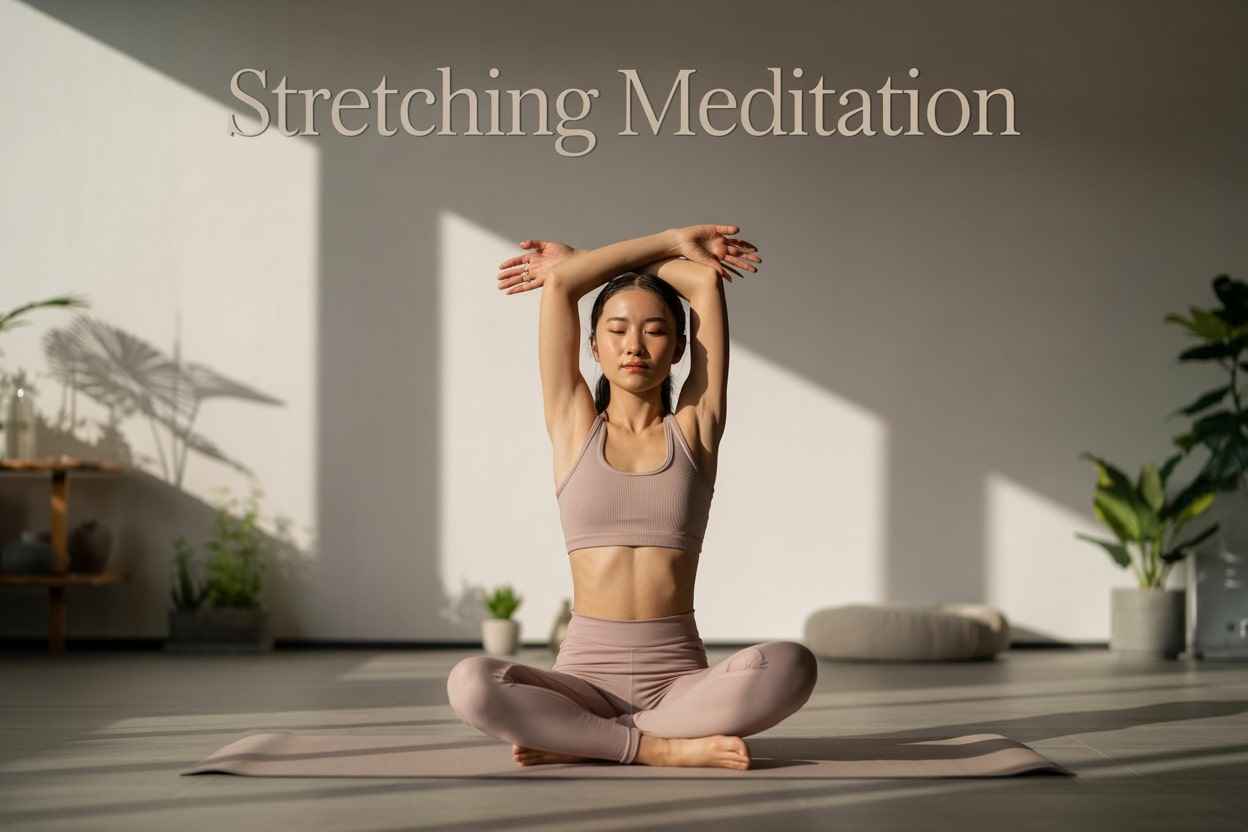
Stretching meditation combines gentle movement with mindful awareness, creating a practice that calms your mind while releasing physical tension. This approach works for busy professionals seeking stress relief, yoga beginners wanting accessible mindfulness, and anyone looking to improve flexibility while finding mental clarity.
You’ll discover what stretching meditation means and how these two practices naturally support each other. We’ll explore specific meditation stretches and exercises you can add to your daily routine, plus learn how to prepare your body for deeper meditation sessions through targeted movement.
You’ll also get practical guidance on guided stretching meditation sessions and find morning and evening routines that blend yoga-influenced stretches with mindful breathing.
What Stretching Meditation Means and How Meditation and Stretching Work Together

Is stretching meditation, and how it differs from regular stretching
Stretching meditation combines the physical benefits of stretching with the mental clarity of mindfulness practice. Unlike regular stretching that focuses purely on muscle lengthening and flexibility, stretching meditation brings conscious awareness to every movement, breath, and sensation. This approach transforms a simple physical exercise into a powerful mind-body practice.
Regular stretching typically involves moving through poses quickly, holding them briefly, and focusing on achieving maximum range of motion. The mind often wanders during these sessions, thinking about the day ahead or replaying past events. In contrast, meditation stretches require you to slow down dramatically, paying close attention to how your body feels throughout each movement.
The key difference lies in intentionality. When practicing stretching meditation, you’re not just working on flexibility – you’re cultivating present-moment awareness. Each stretch becomes an opportunity to observe your thoughts without judgment, notice physical sensations as they arise and change, and develop a deeper connection between your mind and body.
Is stretching a form of meditation for mental calm
Absolutely. Stretching naturally induces a meditative state when approached with mindful awareness. The repetitive, flowing movements create a rhythm that calms the nervous system and quiets mental chatter. When you focus on your breath while moving through stretches, your brain enters a similar state to traditional seated meditation.
The physical act of stretching releases tension stored in muscles and fascia, which often carries emotional stress. As your body relaxes, your mind follows suit. This creates a feedback loop where physical release promotes mental calm, and mental relaxation allows for deeper physical opening.
Many people find stretching meditation more accessible than sitting still for traditional meditation. The gentle movement gives the mind something concrete to focus on, making it easier to stay present. This makes meditative stretching an excellent entry point for those who struggle with conventional meditation practices.
Stretching and meditation as a combined mind body practice
The marriage of stretching and meditation creates a holistic practice that addresses both physical and mental well-being simultaneously. This combination recognizes that the body and mind are interconnected systems that influence each other constantly.
When you practice meditation while stretching, you’re essentially using your body as a meditation object. The sensations of muscles lengthening, joints opening, and breath flowing become anchors for your attention. This embodied approach to meditation often feels more natural and sustainable than purely mental practices.
The physical component of stretching provides immediate feedback about your mental state. If you notice tension, resistance, or forcing in your body, it often reflects similar patterns in your mind. Learning to approach physical limitations with patience and acceptance translates directly to how you handle mental and emotional challenges.
This combined practice also teaches you to find stillness within movement – a valuable skill that extends beyond your practice sessions into daily life activities.
Meditation while stretching, and how awareness plays a role
Awareness serves as the bridge between physical movement and meditative consciousness. During stretching meditation, you cultivate three types of awareness: bodily sensations, breath patterns, and mental activity. This multi-layered attention creates a rich field of present-moment experience.
Start by noticing obvious sensations – the pull in your hamstrings, the opening across your chest, or the stability in your supporting muscles. Gradually refine this awareness to include subtler experiences like energy flowing through your body, the rhythm of your heartbeat, or tiny micro-movements that happen automatically.
Your breath becomes both a tool and an object of meditation during stretching. Deep, conscious breathing enhances the physical benefits of stretching while serving as a focal point for your mind. When your attention wanders, returning to your breath brings you back to the present moment.
Mental awareness involves observing thoughts and emotions that arise without getting caught up in them. You might notice impatience with a tight muscle, self-judgment about your flexibility, or planning thoughts about your day. The key is acknowledging these mental activities and gently returning attention to your physical experience.
Can you meditate while stretching during slow movements
Yes, slow stretching movements are actually ideal for maintaining meditative awareness. The deliberate pace allows you to track sensations moment by moment, creating perfect conditions for mindfulness practice. Quick or forceful movements make it difficult to stay present and often pull you out of meditative consciousness.
Slow movements in stretching meditation mirror the mindful walking practices found in many meditation traditions. Each phase of the movement – beginning, deepening, holding, and releasing – offers opportunities to practice presence and awareness. You can meditate while transitioning between poses, while holding static stretches, and while slowly releasing tension.
The key is maintaining conscious intention throughout the movement. This means moving with purpose rather than habit, breathing deliberately rather than unconsciously, and staying curious about what you’re experiencing rather than going through motions automatically.
This approach transforms simple stretches into moving meditations where each moment contains potential for insight and relaxation. The combination creates a sustainable practice that benefits both your physical flexibility and mental clarity.
Meditation Stretches and Meditation Stretching Exercises for Daily Practice

Meditation Stretches That Support Relaxed Body Awareness
Body awareness forms the foundation of any meaningful stretching meditation practice. When you combine gentle stretches with mindful attention, you create a powerful pathway to understanding how your body holds tension and releases stress. Simple neck rolls become meditation stretches when performed with conscious breathing and focused attention on the sensations moving through your muscles.
Start with seated spinal twists that encourage you to notice which areas of your back feel tight or restricted. As you rotate slowly to each side, breathe deeply and observe how the movement affects your entire torso. This type of meditative stretching teaches you to recognize physical patterns that mirror emotional states.
Shoulder blade squeezes work exceptionally well for building body awareness while releasing upper body tension. Sit comfortably and draw your shoulder blades together while inhaling, then release with your exhale. Focus on the warmth that spreads across your upper back and the way this simple movement affects your posture and breathing.
Hip circles performed while standing or seated help you connect with your body’s center of gravity. Move slowly and deliberately, paying attention to any areas that feel restricted or uncomfortable. This meditation stretching exercise reveals how much tension we carry in our hips from daily sitting and stress.
Meditation Stretching Exercises for Gentle Movement
Gentle movement practices bridge the gap between static meditation and dynamic physical activity. These meditation stretching exercises emphasize slow, controlled motions that keep you anchored in the present moment while promoting physical flexibility and mental clarity.
Cat-cow stretches performed on hands and knees create a flowing rhythm that naturally synchronizes with your breath. Arch your back on the inhale, round it on the exhale, and let this gentle wave-like movement massage your spine while calming your nervous system. This stretching and meditation combination works particularly well for morning practice or whenever you need to reset your energy.
Standing forward folds offer another excellent, gentle movement option. Instead of forcing yourself into a deep stretch, focus on the gradual release that happens as you breathe into the pose. Let your arms hang heavy and sway slightly side to side, creating a meditation while stretching experience that soothes both body and mind.
Gentle side bends while seated, or standing, help open the spaces between your ribs and encourage deeper breathing. Reach one arm overhead and lean to the opposite side, breathing into the stretch for several cycles before switching sides. This type of meditation stretching routine supports better posture and reduces the physical effects of stress.
Meditation Stretching Routine for Beginners
Building a sustainable practice starts with simple, accessible movements that don’t require advanced flexibility or meditation experience. A beginner-friendly routine should last between 10 and 15 minutes and include stretches that target major areas where people commonly hold tension.
Begin with three minutes of conscious breathing while gently rolling your shoulders and neck. This preparation helps transition your mind from daily activities into a more receptive state for stretch meditation. Focus on making your exhales longer than your inhales to activate your relaxation response.
Move into a seated forward fold, reaching toward your feet without straining. Hold for 2-3 minutes while breathing deeply and noticing how the stretch affects your lower back and hamstrings. This stretches for meditation practice helps prepare your body for longer periods of sitting.
Include standing hip flexor stretches by stepping one foot back and gently leaning forward. These stretches before meditation help counteract the tightness that develops from prolonged sitting and create better alignment for seated practice.
Finish with supine knee-to-chest stretches, alternating legs, and then hugging both knees simultaneously. This meditation stretching sequence helps release lower back tension and signals to your nervous system that it’s time to rest and restore.
Stretch Meditation Practices Used for Daily Balance
Daily balance emerges when you weave stretching meditation into your routine rather than treating it as an occasional practice. Morning meditation stretches help set a calm, centered tone for the day ahead, while evening sessions support better sleep and stress release.
5 minutes of meditation practice fits easily into busy schedules and provides significant benefits when performed consistently. Focus on three key movements: gentle neck stretches, spinal twists, and hip openers. This brief routine can be done at your desk, in your bedroom, or in any quiet space.
Workplace stretching meditation involves subtle movements that can be performed throughout the day. Ankle circles under your desk, seated spinal extensions, and shoulder rolls help maintain body awareness and reduce accumulated tension during long work sessions.
Creating transition rituals using stretch and meditation helps mark the boundaries between different parts of your day. A brief stretching routine when you arrive home signals to your body and mind that work is over and personal time has begun.
Stretch and Meditate Sessions for Slow Controlled Movement
Slow controlled movement transforms ordinary stretches into moving meditation experiences. The key lies in maintaining continuous awareness of your breath, physical sensations, and mental state throughout each movement sequence.
Develop your ability to stretch and meditate simultaneously by practicing single movements for extended periods. Hold a simple side stretch for five full minutes, breathing consciously and observing how your body gradually opens and releases. This type of meditation and stretch practice builds patience and deepens your awareness of subtle physical changes.
Use counting or breath awareness to maintain focus during longer holds. Count your breaths up to ten and then start over, or focus on making each exhale slightly longer than the previous one. This approach keeps your mind engaged while your body experiences the benefits of sustained stretching.
Flowing sequences that link multiple stretches together create opportunities for moving meditation. Transition slowly between poses, maintaining awareness of how one movement prepares your body for the next. This meditation and stretching approach builds both flexibility and mindfulness skills that support overall well-being.
How to Stretch for Meditation and Prepare the Body for Stillness

Stretching for Meditation to Release Body Tension
Your body carries stress from the moment you wake up. Whether it’s from sleeping in an awkward position, hunching over a computer, or dealing with daily pressures, tension accumulates in your muscles and joints. This physical stress creates mental noise that interferes with meditation. When you practice stretching for meditation, you’re essentially clearing the pathway between your body and mind.
Start by identifying where you hold tension most. Common spots include the neck, shoulders, lower back, and hips. Gentle neck rolls help release cervical spine tightness that builds up from looking down at devices. Roll your shoulders backward in slow circles to counteract the forward-hunched posture many people develop throughout the day.
For deeper tension release, focus on your hip flexors and lower back. These areas tighten from prolonged sitting and create a cascade of discomfort that travels up your spine. A simple forward fold while standing allows gravity to lengthen your spine naturally. Hold each stretch for 30-60 seconds, breathing deeply and allowing your body to soften with each exhale.
The key is moving slowly and mindfully. This isn’t about achieving perfect flexibility or pushing through pain. Instead, think of it as having a gentle conversation with your body, asking what it needs and responding with compassion.
Stretches for Meditation Posture and Seated Comfort
Sitting comfortably for meditation requires more than just finding a cushion. Your body needs preparation to maintain proper alignment without strain. Poor posture during meditation creates new tension and distracts from your practice.
Hip flexibility plays a major role in comfortable seated meditation. Tight hips force your pelvis to tilt backward, creating a rounded spine and compressed breathing. Practice hip circles while seated or standing to warm up the joint. The butterfly stretch, where you sit with the soles of your feet together and gently press your knees toward the ground, opens the hip flexors and inner thighs.
Your spine needs length and mobility for extended sitting. Cat-cow stretches performed on hands and knees create spinal flexibility in both directions. Start on your hands and knees, then alternate between arching your back (cow) and rounding it toward the ceiling (cat). This movement lubricates the spinal joints and awakens the small muscles that support your posture.
Don’t forget about your shoulders and chest. Doorway stretches are perfect for opening tight chest muscles that pull your shoulders forward. Stand in a doorway with your arms extended against the frame, then step forward gently to feel the stretch across your chest.
Stretches for Sitting Meditation Used Before Longer Sessions
Extended meditation sessions demand extra preparation. Your body needs to be primed for stillness that might last 20 minutes, 45 minutes, or even longer. Think of this as warming up before exercise – you’re preparing your system for sustained activity.
Begin with joint mobility exercises. Ankle circles and calf stretches prevent your legs from falling asleep. Seated spinal twists help decompress the vertebrae and create space between the discs. Sit tall and gently rotate your torso to the right, using your left hand on your right knee for leverage. Hold for several breaths, then repeat on the other side.
Your legs need special attention before long sitting. Lying on your back, pull one knee toward your chest while keeping the other leg extended. This stretches the hip flexors of the extended leg and the glutes of the bent leg. Switch legs and repeat. Follow this with a figure-four stretch, where you place one ankle on the opposite knee and gently pull the supporting leg toward your chest.
Essential Pre-Session Stretches:
| Stretch | Duration | Target Area | Benefit |
|---|---|---|---|
| Standing Forward Fold | 1-2 minutes | Hamstrings, Lower Back | Calms nervous system |
| Seated Spinal Twist | 30 seconds each side | Spine, Core | Improves posture |
| Hip Flexor Stretch | 45 seconds each side | Hips, Psoas | Seated comfort |
| Neck Release | 30 seconds each direction | Cervical Spine | Mental clarity |
Stretching Before Meditation to Settle the Body
The transition from daily activity to meditation requires a bridge. Stretching before meditation serves as this bridge, signaling to your nervous system that it’s time to shift into a calmer state. This isn’t just physical preparation – it’s psychological preparation too.
Start with movements that mirror your day-to-day activities but in reverse. If you’ve been sitting, do standing stretches. If you’ve been active, choose gentle floor stretches. This contrast helps your body recognize the shift you’re making.
Breathing awareness during these preparatory stretches amplifies their settling effect. As you stretch, focus on lengthening your exhales. This activates your parasympathetic nervous system, which governs rest. A simple standing side stretch becomes much more powerful when you breathe consciously into the extended side of your ribcage.
Child’s pose serves as an excellent transition stretch. Kneel on the floor, sit back on your heels, then fold forward with your arms extended in front of you. This position naturally turns your attention inward while gently stretching your back, hips, and shoulders. Stay here for several breaths, letting your body weight sink into the support of the earth.
Stretches to Do Before Meditation for Ease and Alignment
Proper alignment during meditation prevents discomfort and allows energy to flow freely through your body. The stretches you choose should address the specific areas that affect your sitting posture and overall comfort.
Your thoracic spine – the middle portion of your back – often becomes rigid from poor posture habits. A simple wall stretch can restore its natural curve. Stand arm’s length from a wall, place your palms flat against it at shoulder height, then walk your feet back while keeping your arms straight. This creates a gentle backbend that opens your chest and extends your mid-back.
Calf and hamstring flexibility directly impacts your ability to sit cross-legged comfortably. Tight hamstrings pull your pelvis into a posterior tilt, creating a slumped posture that’s impossible to maintain without strain. A standing forward fold with slightly bent knees targets both muscle groups while being accessible to most people, regardless of flexibility level.
The psoas muscle, which connects your lower spine to your thighbone, is often called the “muscle of the soul” because of its connection to emotional holding patterns. A low lunge stretch effectively releases psoas tension. Step one foot forward into a lunge position, then lower your back knee to the ground and gently press your hips forward.
Remember that consistency matters more than intensity. Five minutes of gentle, mindful stretching before each meditation session will serve you better than an aggressive 30-minute routine you only do occasionally. Your body learns to anticipate and prepare for meditation when you establish this ritual, making the transition into stillness smoother and more natural.
Guided Stretching Meditation and Mindful Stretch Meditation Sessions

Guided stretching meditation for relaxed awareness
Finding your center through guided stretching meditation creates a beautiful bridge between movement and mindfulness. When you follow along with gentle verbal cues, your body naturally releases tension while your mind settles into a state of relaxed awareness. The guidance helps you tune into sensations without judgment, allowing both physical and mental stress to melt away.
A typical guided session starts with simple neck rolls and shoulder movements before progressing to deeper stretches. The instructor’s voice acts as your anchor, reminding you to breathe deeply and notice how each stretch affects your body. This awareness develops gradually – you might start by simply noticing tight spots, then progress to observing how your breath changes the intensity of each stretch.
The magic happens when you stop trying to force anything. Instead of pushing into stretches, guided sessions teach you to invite openness. Your instructor might say “breathe into your hip flexors” or “let your spine lengthen on the exhale.” These cues help you discover that awareness itself creates relaxation.
Guided meditation and stretching for calm focus
Combining guided meditation and stretching creates laser-focused attention that busy minds crave. The dual focus on breath and movement naturally quiets mental chatter. When your instructor guides you to “reach your arms overhead while breathing in for four counts,” your mind has something concrete to focus on rather than wandering to tomorrow’s meetings or yesterday’s conversations.
This practice builds concentration skills that transfer into daily life. Starting with 10-15 minutes of guided stretch meditation teaches your nervous system to shift gears quickly. You learn to move from scattered thinking to concentrated awareness simply by following movement cues paired with breathing instructions.
Professional guided sessions often include specific focus techniques like counting breaths during holds or visualizing breath flowing to stretched muscles. These elements train your attention muscle just like physical stretches train your flexibility.
Guided stretch meditation for beginners at home
Setting up your home practice doesn’t require expensive equipment or years of experience. Start with online guided stretch meditation videos specifically designed for beginners. Look for sessions that emphasize safety and provide modifications for different flexibility levels.
Create a dedicated space with enough room to extend your arms and legs fully. A yoga mat helps, but isn’t essential – a carpeted area works fine. Choose sessions lasting 15-30 minutes when starting. Longer practices can feel overwhelming initially.
Popular beginner-friendly guidance includes:
- Simple seated stretches for neck and shoulders
- Gentle standing forward folds
- Supported child’s pose variations
- Basic hip openers while lying down
The key is consistency over intensity. Following the same guided routine for several weeks builds familiarity and confidence before exploring more advanced sessions.
Mindful stretching meditation with breath awareness
Breath awareness transforms ordinary stretching into a profound meditation practice. When you mindfully coordinate movement with breathing patterns, each stretch becomes a moving meditation. Your instructor guides you to inhale while lengthening and exhale while deepening stretches.
This breathwork creates a natural rhythm that calms your nervous system. Shallow, anxious breathing shifts to deep, nourishing breaths that support both flexibility and mental clarity. You learn to use breath as a measuring tool – if you can’t breathe comfortably in a stretch, you’re probably pushing too hard.
Advanced mindful stretching meditation includes breath retention techniques and specific breathing patterns like ujjayi breath. These practices deepen the meditative state while supporting safe, effective stretching.
Stretch and breath meditation for steady attention
Pairing specific stretches with breathing exercises builds unwavering focus. Unlike seated meditation, where attention might drift, stretch, and breath meditation gives your mind clear tasks. You breathe in while reaching, hold while breathing steadily, and exhale while releasing.
This combination trains steady attention through gentle challenge. Your mind learns to maintain awareness even when your body feels sensations or mild discomfort. The practice develops mental resilience and emotional stability that extends far beyond your meditation session.
Regular stretch and breath meditation sessions create measurable improvements in concentration span and stress response. Many practitioners report better sleep, reduced anxiety, and improved ability to stay present during challenging situations.
Morning and Evening Stretch Meditation Routines with Yoga Influence

Morning Meditation and Stretching for Gentle Energy
The way you start your morning sets the tone for everything that follows. Morning meditation and stretching create a perfect foundation for the day ahead, combining gentle movement with mindful awareness to awaken both body and mind naturally. Unlike jarring alarm clocks or rushing into caffeine, this practice offers a softer approach to energy cultivation.
Your body naturally stiffens overnight as muscles relax and circulation slows. Morning meditation stretches address this physical reality while simultaneously engaging your mental awareness. The combination works because gentle stretching increases blood flow to muscles and joints, while meditation helps you tune into your body’s signals and needs.
A typical morning stretch meditation routine begins with simple spinal movements like gentle twists while seated on the edge of your bed. These initial movements help your nervous system transition from sleep to wakefulness without shock. As you move through basic stretches, focus on your breath and the sensations arising in your body.
Morning Stretch Meditation for Calm Focus
Morning stretch meditation, specifically designed for focus, emphasizes movements that enhance mental clarity while maintaining a relaxed state. This approach differs from high-energy morning workouts by prioritizing mindful attention over intensity.
Begin with neck and shoulder rolls to release tension accumulated during sleep. These areas often hold stress, and addressing them early creates space for clearer thinking. Move slowly and deliberately, treating each movement as a form of moving meditation.
Cat-cow stretches performed mindfully serve as excellent meditation stretching exercises for morning focus. As you arch and round your spine, coordinate the movement with deep breaths. This rhythmic pattern helps regulate your nervous system and creates a meditative state that supports sustained attention throughout the day.
Hip flexor stretches are particularly valuable for those who spend long hours sitting. Stretching for meditation posture preparation starts with opening these areas that tend to tighten and pull on your lower back. A simple kneeling lunge, held with conscious breathing, serves both physical and mental preparation.
Meditation and Stretching in the Morning as a Daily Habit
Establishing meditation and stretching in the morning as a consistent practice requires understanding the neurological benefits of routine. Your brain creates neural pathways that support habit formation, making this combined practice easier and more natural over time.
Start with just five minutes to build consistency. 5 minute stretch meditation sessions are sustainable and provide immediate benefits without overwhelming your schedule. Choose three basic stretches and pair each with specific breathing patterns or mental focuses.
The key to maintaining this habit lies in preparation. Keep comfortable clothes accessible and designate a specific space for your practice. This removes barriers that might prevent you from following through on busy mornings.
Track your practice using a simple method that works for you – whether it’s marking a calendar or using a habit-tracking app. The visual reminder of your consistency reinforces the neural pathways supporting this healthy routine.
Meditation and Stretching Before Bed for Relaxation
Evening practice serves an entirely different purpose than morning routines. Meditation and stretching before bed focus on releasing the day’s accumulated tension and preparing your body and mind for restorative sleep. This transition time becomes a sacred space between the demands of daily life and the restoration of sleep.
Stretching and meditation before bed should emphasize gentle, passive stretches that activate your parasympathetic nervous system. Forward folds, supported twists, and gentle hip openers create physical conditions conducive to relaxation while providing anchors for mindful attention.
Legs-up-the-wall pose combined with deep breathing exemplifies perfect evening practice. This restorative position reverses blood flow, reduces swelling in legs and feet, and creates a natural meditation posture that requires minimal effort while maximizing relaxation benefits.
Yoga Stretch Meditation and Deep Stretch Meditation Yoga
Yoga stretch meditation represents the natural evolution of combining these practices, drawing from thousands of years of integrated wisdom. Traditional yoga already incorporates meditative elements, but emphasizing the meditation aspect deepens the experience beyond physical flexibility.
Deep stretch meditation yoga involves holding poses for extended periods while maintaining meditative awareness. Yin yoga principles apply here – longer holds in passive positions allow both physical opening and mental settling. These practices teach patience and acceptance while creating profound physical changes.
Yoga meditation stretch sequences might include supported child’s pose flowing into gentle backbends, creating a natural rhythm between effort and ease. The key lies in treating each transition as an opportunity for mindful movement rather than simply getting to the next position.
Creating your own yoga stretching and meditation practice means listening to your body’s needs each day and adjusting accordingly. Some days call for more dynamic movement, while others benefit from slower, more introspective approaches. This flexibility keeps the practice sustainable and personally meaningful.

Stretching meditation brings together two powerful practices that naturally complement each other. When you combine mindful movement with focused breathing, you create space for both your body and mind to unwind.
The gentle stretches prepare your muscles for longer periods of sitting or lying still, while the meditative aspect helps you tune into your body’s needs and release tension you might not even realize you’re carrying.
Start small with just five or ten minutes each day, whether that’s a gentle morning routine to wake up your body or an evening session to let go of the day’s stress. You don’t need to be flexible or experienced in meditation to begin – just bring curiosity and patience to the practice.
As you make stretching meditation a regular part of your routine, you’ll likely notice improvements in both your physical comfort and mental clarity throughout the day.
FAQs
What is stretching meditation, and how is it different from regular stretching
Stretching meditation is a practice where physical stretches are done with steady attention and calm breathing. Unlike regular stretching, the focus stays on body awareness, breath, and mental stillness throughout each movement.
Is stretching a form of meditation
Yes, stretching can be a form of meditation when movements are slow, and attention stays on breathing and physical sensation. In this state, the mind remains present while the body moves gently.
Can you meditate while stretching
You can meditate while stretching by keeping your attention on breath and movement instead of external distractions. This approach is often called meditation while stretching or meditative stretching.
Can you stretch while meditating
Stretching while meditating is common in guided stretch meditation sessions. Light movement helps release tension while maintaining a calm mental state.
What are meditation stretches, and who should practice them
Meditation stretches are gentle movements designed to support relaxation and body awareness. They are suitable for beginners, people with stiff muscles, and anyone who finds still meditation difficult.
How to stretch for meditation before sitting still
Stretching for meditation usually includes neck, back, hip, and leg movements. These stretches help the body feel more comfortable before sitting meditation begins.
What stretches are helpful for the meditation posture
Stretches for meditation posture often focus on the hips, spine, shoulders, and neck. These areas support upright sitting and reduce discomfort during longer meditation sessions.
Are guided stretching meditation sessions helpful for beginners
Guided stretching meditation sessions help beginners stay focused by providing verbal cues for breath and movement. They are useful for learning how to combine stretching and meditation.
Is morning meditation and stretching good for a daily routine
Morning meditation and stretching help loosen the body and prepare the mind for the day. Many people use morning stretch meditation to build a calm and steady start.
Does stretching and meditation before bed support relaxation
Stretching and meditation before bed help release physical tension and quiet the mind. This practice is often used to support relaxation at night.
What is stretch and breath meditation?
Stretch and breath meditation combines slow stretching with steady breathing patterns. The goal is to keep attention on breath while moving the body gently.
Can stretching meditation be done in five minutes
5-minute stretch meditation is enough for light relaxation and a mental reset. Short sessions are often used during busy schedules or as a daily habit.