
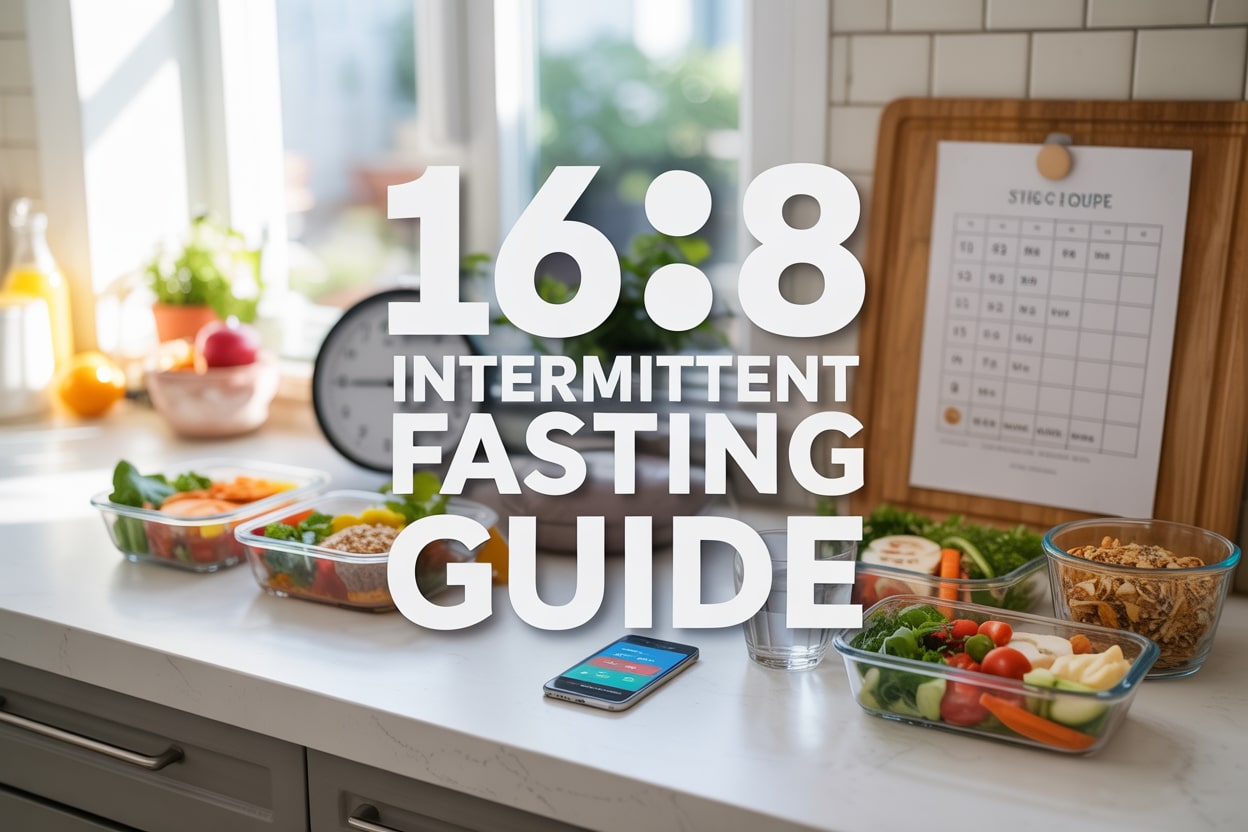
intermittent fasting schedule 16/8 has become one of the most popular eating patterns for good reason – it’s clear to follow, flexible, and fits into most lifestyles. If you’re new to intermittent fasting or want to fix your current routine, this guide breaks down everything you need to know about the 16 8 intermittent fasting schedule.
This Complete resource is perfect for beginners starting their fasting journey, busy professionals looking for a sustainable eating pattern, and anyone wanting proven strategies to make intermittent fasting work long-term.
You’ll find how to set up your ideal eating window that matches your daily routine and lifestyle. We’ll share practical tips that help you stick to your 16:8 schedule without feeling deprived or overwhelmed. Plus, you’ll get access to sample meal plans and free PDF resources you can download and use right away to track your progress and stay organized.
Intermittent Fasting Schedule 16/8 Method

What is the 16:8 fasting schedule and how does it works
The 16:8 intermittent fasting schedule is one of the most popular time-restricted eating patterns, where you fast for 16 consecutive hours and eat all your meals within an 8-hour window. During the fasting period, you consume only water, plain tea, black coffee, or other non-caloric beverages. The eating window allows you to have 2-3 meals and snacks as needed.
A typical 16:8 intermittent fasting schedule might look like eating from 12:00 PM to 8:00 PM, then fasting from 8:00 PM until 12:00 PM the next day. Many people find this approach easier than other fasting methods because it naturally eliminates late-night snacking and often just means skipping breakfast.
The science behind this method centers on metabolic switching. After about 12 hours without food, your body depletes its glycogen stores and begins burning fat for energy. This process, called ketosis, becomes more pronounced as the fasting period extends beyond 16 hours. Your insulin levels drop significantly during the fasting window, making it easier for your body to access stored fat.
The 16:8 intermittent fasting schedule works because it aligns with your body’s natural circadian rhythms. Most people naturally experience lower hunger levels in the morning, making it easier to extend the overnight fast until midday.
Benefits for weight loss and metabolic health
Weight loss represents the most commonly sought benefit of the 16:8 eating schedule for intermittent fasting. By restricting your eating window, you naturally reduce your overall caloric intake without consciously counting calories. Studies show that people following a 16:8 pattern typically consume 300-500 fewer calories per day compared to unrestricted eating patterns.
The metabolic benefits extend far beyond the clear calorie reduction:
Fat Burning makes it better
- grow fat oxidation during fasting periods
- make it better insulin sensitivity
- Higher human growth hormone levels
- make it better, autophagy (cellular cleaning process)
Blood Sugar Regulation
- Lower fasting glucose levels
- Reduced insulin resistance
- Better post-meal blood sugar control
- Decreased risk of type 2 diabetes
Cardiovascular Health
- Reduced blood pressure
- make it better cholesterol profiles
- Lower inflammation markers
- make it better heart rate variability
Research indicates that people following an intermittent fasting schedule 16/8 can lose 3-8% of their body weight over 3-24 weeks. The weight loss typically includes a higher percentage of fat loss compared to muscle loss when combined with adequate protein intake and resistance training.
Who should avoid this fasting approach?
While the 16:8 intermittent fasting schedule offers numerous benefits, certain individuals should exercise caution or avoid this eating pattern entirely.
Medical Conditions Requiring Consultation
- Type 1 diabetes or insulin-dependent diabetes
- History of eating disorders
- Pregnancy or breastfeeding
- Chronic kidney disease
- Active gallbladder disease
- Certain medications require food intake
Groups Who Should Proceed with Caution
- Children and teenagers (still growing)
- Adults over 65 years old
- People with low blood pressure
- Individuals with a history of hypoglycemia
- Those taking blood pressure medications
Warning Signs to Stop Fasting
- Persistent fatigue or weakness
- Dizziness or lightheadedness
- Severe headaches
- Difficulty concentrating
- Irregular menstrual cycles
- Hair loss or brittle nails
Athletes engaging in intense training may find that the 16:8 schedule doesn’t provide adequate fuel for optimal performance. Similarly, people with physically demanding jobs might struggle with energy levels during the fasting window.
If you have any underlying health conditions or take medications, consult with your healthcare provider before starting any intermittent fasting schedule. They can help determine if this approach aligns with your individual health needs and goals.
Setting Up Your Perfect 16:8 Eating Window

Choosing the ideal 8-hour eating period for your lifestyle
The beauty of the 16:8 intermittent fasting schedule lies in its flexibility. Your eating window should work with your natural rhythms, not against them. Most people find success with one of three popular windows: 12 PM to 8 PM, 11 AM to 7 PM, or 10 AM to 6 PM.
Consider your natural hunger patterns. Are you someone who wakes up starving, or do you naturally skip breakfast anyway? If you’re not a morning eater, pushing your first meal to noon or later feels effortless. On the flip side, if you’re genuinely hungry in the morning, starting your eating window at 10 AM might be your sweet spot.
Your sleep schedule plays a huge role, too. Night owls who stay up until midnight should avoid eating close to bedtime, which might push their window earlier. Early birds who wake at 5 AM might prefer starting their eating schedule sooner to align with their natural circadian rhythm.
| Eating Window | Best For | Pros | Cons |
|---|---|---|---|
| 10 AM – 6 PM | Early risers, those who sleep by 10 PM | Natural hunger alignment, better sleep | May conflict with dinner plans |
| 12 PM – 8 PM | Average schedules, social eaters | Most flexible for social events | Requires skipping breakfast |
| 2 PM – 10 PM | Night owls, late workers | Accommodates late dinners | Very late eating may affect sleep |
Aligning your fasting schedule with work and social commitments
Your intermittent fasting 16 8 schedule needs to mesh smoothly with your real life. Start by mapping out your weekly commitments. Do you have regular lunch meetings? Family dinners on Sunday? Date nights on Friday?
The 12 PM to 8 PM window tends to be the most socially friendly option. You can join colleagues for lunch and still make dinner reservations without stress. This schedule for intermittent fasting 16 8 allows you to participate in most social eating situations while maintaining your fasting routine.
Work schedules significantly impact your success. If you work night shifts, your eating schedule for 16 8 intermittent fasting will look completely different from someone with a 9-to-5 job. Shift workers often find success eating during their active hours, regardless of what time that falls on the clock.
Travel and irregular schedules require flexibility. Instead of abandoning your routine entirely, adjust your window to match your new time zone or schedule. The key is maintaining the 16-hour fasting period, even if the clock times shift.
Adjusting timing for the highest fat-burning results
Your body’s fat-burning potential peaks during different parts of your fast. The magic really starts happening around the 12-hour mark when glycogen stores deplete, and fat oxidation grows. By hour 16, you’re in prime fat-burning territory.
Morning fasters who eat their last meal by 6 PM tap into overnight fat burning more cleverly. Your body continues burning fat through the night and well into the next morning. This extended fat-burning period can accelerate results for those focused on weight loss.
Exercise timing can supercharge your results. Working out in a fasted state, particularly during the final hours of your fast, forces your body to rely on stored fat for energy. A 30-minute walk or light workout before breaking your fast can amplify the fat-burning benefits.
Some people benefit from pushing their eating window later in the day. The 2 PM to 10 PM schedule extends the morning fasting period, potentially increasing fat oxidation. However, this approach requires careful attention to sleep quality since late eating can interfere with rest.
Common timing mistakes that sabotage success
The biggest mistake people make is choosing an eating window based on what sounds good on paper rather than what fits their lifestyle. That perfect 10 AM to 6 PM schedule means nothing if you’re constantly breaking it for work dinners or social events.
Eating too close to bedtime disrupts sleep quality and interferes with overnight fat burning. Your last meal should ideally finish at least 2-3 hours before sleep. If you’re eating until 10 PM but going to bed at 10:30 PM, you’re working against your body’s natural processes.
Another common error is switching your intermittent fasting 16 8 schedule too frequently. Your body needs time to adapt to your chosen window. Constantly changing your eating times prevents you from developing a sustainable routine and can leave you feeling perpetually hungry or tired.
Ignoring weekend flexibility often leads to complete abandonment of the schedule. Build in some wiggle room for social events rather than viewing any deviation as failure. A successful 16:8 schedule is one you can maintain long-term, which means allowing for real life to happen occasionally.
needed Tips for 16:8 Fasting Success

Strategic Meal Planning Within Your Eating Window
Planning your meals becomes your secret weapon when following a 16 8 intermittent fasting schedule. Start by mapping out your eating window—whether that’s 12 pm to 8 pm or 10 am to 6 pm—and divide it into two or three balanced meals. Your first meal should pack protein and healthy fats to stabilize blood sugar after your fasting period. Think eggs with avocado, Greek yogurt with nuts, or a protein-rich smoothie.
Prep your meals ahead of time to avoid decision fatigue during your eating window. Batch cook proteins, chop vegetables, and portion out snacks. This preparation prevents you from reaching for processed foods when hunger strikes. Focus on whole foods that provide sustained energy: lean proteins, complex carbohydrates, healthy fats, and plenty of vegetables.
Keep your intermittent fasting schedule 16 8 pdf handy and plan around your lifestyle. If you have evening social commitments, adjust your eating window accordingly. The beauty of this approach lies in its flexibility—you can shift your schedule to match your daily routine.
Staying Hydrated and Managing Hunger During Fasting Hours
Water becomes your best friend during fasting periods. Aim for at least 8-10 glasses throughout the day, including during your 16-hour fast. Often, what feels like hunger is actually dehydration. Add a pinch of sea salt or lemon to your water for extra electrolytes without breaking your fast.
Black coffee and plain tea are your allies during fasting hours. These beverages can suppress appetite and provide mental clarity. Herbal teas like peppermint, chamomile, or green tea offer variety and additional health benefits. Avoid adding cream, sugar, or artificial sweeteners, as these can trigger insulin responses and technically break your fast.
When hunger pangs hit, distract yourself with activities. Take a walk, practice deep breathing, or engage in a hobby. Remember that hunger comes in waves—it will pass. Many people find that hunger actually decreases after the first week of following their 16 8 intermittent fasting schedule.
Sparkling water with a splash of apple cider vinegar can help curb cravings and may support digestion. Just make sure any additions are calorie-free and won’t spike insulin levels.
Breaking Your Fast with the Right Foods for Sustained Energy
The first meal after your fast sets the tone for your entire eating window. Break your fast gently with easily digestible foods that won’t shock your system. Start with something light like bone broth, a small portion of fruit, or herbal tea before diving into your main meal.
Your first substantial meal should emphasize protein and healthy fats while limiting refined carbohydrates. These macronutrients provide steady energy and prevent blood sugar spikes that can lead to crashes later. Great options include:
- Scrambled eggs with sautéed vegetables
- Greek yogurt with berries and nuts
- Avocado toast on whole-grain bread
- Smoothie with protein powder, spinach, and almond butter
- Grilled chicken salad with olive oil dressing
Avoid breaking your fast with sugary foods, processed snacks, or large portions. These can cause digestive discomfort and energy crashes. Your stomach has been resting for 16 hours, so treat it with respect.
Time your first meal strategically. If you exercise during your eating window, consider having your largest meal post-workout to support recovery and muscle synthesis.
Managing Social Situations and Dining Out While Fasting
Social eating doesn’t have to derail your intermittent fasting eating schedule 16 8. Plan by checking restaurant menus and choosing establishments that align with your eating window. Don’t be afraid to adjust your fasting schedule occasionally for special events—flexibility prevents the plan from becoming a prison.
When dining out during your eating window, opt for protein- and vegetable-heavy dishes. Ask for dressings and sauces on the side, choose grilled over fried options, and don’t hesitate to modify menu items to suit your preferences. Most restaurants are happy to accommodate dietary preferences.
If a social event falls during your fasting hours, become the designated driver or bring a special beverage like herbal tea in a to-go cup. Most people won’t even notice you’re not eating if you stay engaged in conversation and activities.
Communicate your schedule with close friends and family. Explain that you’re following a specific eating schedule for health benefits, and most people will be supportive. You might even inspire others to try their own intermittent fasting schedule 16/8 approach.
Tracking Progress and Adjusting Your Approach
Keep a clear to follow journal to track how you feel during different phases of your fasting schedule. Note energy levels, hunger patterns, sleep quality, and mood changes. This information helps you identify what’s working and what needs adjustment.
Use apps or printable intermittent fasting schedule 16 8 trackers to monitor your fasting windows. Many people find visual tracking motivating and helpful for building consistency. Track metrics beyond just weight—measurements, how clothes fit, and overall well-being paint a more complete picture.
Pay attention to your body’s signals. If you consistently feel weak, dizzy, or overly irritable, consider shortening your fasting window or consulting a healthcare provider. The schedule for intermittent fasting 16 8 should make your life, not make it miserable.
Adjust your approach based on your lifestyle changes. Shift workers, travelers, or people with changing schedules may need to modify their eating windows regularly. The key is finding a sustainable rhythm that you can maintain long-term while still reaping the benefits of intermittent fasting.
Sample 16:8 Meal Plans and Schedules

Beginner-friendly Weekly Meal Plan with Timing Guides
Starting your 16:8 intermittent fasting journey can feel overwhelming, but having a structured eating schedule for 16 8 intermittent fasting makes all the difference. Here’s a practical seven-day plan designed for newcomers.
Daily Schedule: 12:00 PM – 8:00 PM Eating Window
| Day | First Meal (12:00 PM) | Snack (3:00 PM) | Dinner (6:30 PM) |
|---|---|---|---|
| Monday | Grilled chicken salad with avocado | Greek yogurt with berries | Baked salmon with quinoa and vegetables |
| Tuesday | Turkey and veggie wrap | Apple slices with almond butter | Lean beef stir-fry with brown rice |
| Wednesday | Quinoa bowl with mixed vegetables | Handful of nuts | Grilled chicken breast with sweet potato |
| Thursday | Tuna salad with whole grain crackers | Cottage cheese with cucumber | Baked cod with roasted vegetables |
| Friday | Chicken and vegetable soup | Protein smoothie | Turkey meatballs with zucchini noodles |
| Saturday | Omelet with spinach and cheese | Trail mix | Grilled portobello mushroom with quinoa |
| Sunday | Buddha bowl with chickpeas | Hummus with carrot sticks | Baked chicken thighs with Brussels sprouts |
Hydration Schedule:
- 7:00 AM: Large glass of water upon waking
- 10:00 AM: Black coffee or green tea
- 11:30 AM: Water with lemon
- Throughout the eating window: 2-3 additional glasses of water
- 9:00 PM: Herbal tea before bed
This 16 8 intermittent fasting schedule allows your body to gradually adapt while maintaining steady energy levels throughout the day.
Advanced Meal Plans for Fitness Enthusiasts
Athletes and fitness enthusiasts need strategic nutrition timing to get the most out of performance while following a 16/8 intermittent fasting schedule. This advanced approach focuses on pre- and post-workout nutrition within the eating window.
Training Day Schedule: 1:00 PM – 9:00 PM Eating Window
Pre-Workout Meal (1:00 PM):
- Banana with 2 tbsp almond butter
- Black coffee or green tea
- 500ml water
Post-Workout Meal (3:30 PM):
- Protein shake with whey protein, spinach, and berries
- Complex carbohydrates like oatmeal or sweet potato
Main Dinner (7:00 PM):
- Lean protein (6-8 oz)
- Complex carbs
- Healthy fats
- Plenty of vegetables
Weekly Training-Focused Menu:
| Training Focus | Pre-Workout | Post-Workout | Dinner |
|---|---|---|---|
| Strength Training | Oatmeal with banana | Protein shake + sweet potato | Steak with quinoa and asparagus |
| Cardio Day | Apple with peanut butter | Greek yogurt with granola | Grilled chicken with rice and broccoli |
| HIIT Workout | Whole grain toast with honey | Chocolate milk + banana | Salmon with pasta and mixed vegetables |
| Rest Day | Light smoothie | Cottage cheese with fruit | Turkey breast with roasted vegetables |
Supplement Timing:
- BCAAs: During the fasting window, if training fasted
- Creatine: Post-workout with carbohydrates
- Multivitamin: With the first meal
- Omega-3: With dinner
This approach makes sure optimal muscle recovery and performance while maintaining the metabolic benefits of your intermittent fasting 16 8 eating schedule.
Free PDF Resources and Tracking Tools

Downloadable 16:8 Schedule Templates and Planners
Getting your 16 8 intermittent fasting schedule organized becomes much easier with the right printable intermittent fasting schedule 16 8 templates. These PDF resources include customizable daily and weekly planners that let you mark your eating windows, fasting periods, and meal times. The templates come with built-in flexibility, allowing you to adjust your eating schedule for 16 8 intermittent fasting based on your work schedule, family commitments, or social events.
The most popular templates feature color-coded time blocks that clearly show your 16-hour fasting period and 8-hour eating window. Many users find success with the visual approach – seeing their entire week mapped out helps them stay committed to their chosen intermittent fasting eating schedule 16 8. Each template includes space for notes about how you feel during different parts of your fast, making it easier to identify patterns and fix your routine.
Meal Prep Checklists and Grocery Shopping Guides
Smart meal preparation makes or breaks your 16 8 intermittent fasting schedule success. The Complete checklists break down your shopping into categories: proteins, healthy fats, complex carbohydrates, and nutrient-dense vegetables. Each category includes portion recommendations and storage tips to get the most out of freshness throughout the week.
The grocery guides also feature budget-friendly alternatives and seasonal swaps, helping you maintain variety without breaking the bank. Special emphasis is placed on foods that provide sustained energy during your eating window and won’t leave you feeling sluggish during fasting hours. The prep checklists include time-saving strategies like batch cooking proteins, pre-cutting vegetables, and preparing grab-and-go snack portions that align with your eating schedule.
Progress Tracking Sheets for Weight and Energy Levels
Consistent tracking changes your intermittent fasting 16 8 eating schedule from guesswork into a data-driven approach. The tracking sheets capture daily weight measurements, energy levels on a 1-10 scale, sleep quality ratings, and mood assessments. This Complete view helps you spot connections between your fasting routine and overall well-being.
The sheets include weekly summary sections where you can calculate averages and identify trends. Many people find that their energy levels actually make it better during certain parts of their fasting window, while others notice better sleep quality when they finish eating earlier in their window. The progress sheets also have space for noting any adjustments you make to your schedule for intermittent fasting 16 8 and how those changes affect your results.
Quick Reference Guides for Fasting-Friendly Foods and Beverages
Knowing what breaks your fast and what doesn’t can be confusing, especially when starting your 16 8 intermittent fasting time schedule. The quick reference guides provide clear yes/no lists for common foods and drinks, removing guesswork from your daily routine. Green light items include water, black coffee, plain tea, and sparkling water, while red light items cover anything with calories during fasting hours.
The guides also include a gray area section for items like lemon water, apple cider vinegar, and sugar-free gum – explaining the minimal calorie impact and letting you decide based on your goals. Special attention is given to artificial sweeteners, explaining which ones might trigger cravings and potentially make fasting more challenging. The beverage section includes homemade recipe ideas for flavored waters and herbal tea blends that can make your fasting hours more enjoyable without compromising your results.

The 16:8 intermittent fasting method offers a straightforward approach to improving your health and managing your weight. By eating within an 8-hour window and fasting for 16 hours, you can tap into your body’s natural fat-burning processes while still enjoying satisfying meals. The key lies in finding an eating window that fits your lifestyle, staying hydrated during fasting hours, and focusing on nutrient-dense foods when you do eat.
Getting started doesn’t have to be overwhelming. Begin by gradually shifting your eating times, use the sample meal plans as your guide, and track your progress with the free PDF resources available. Remember that consistency beats perfection – even if you slip up occasionally, just get back on track the next day. Your body will adapt, and you’ll likely find that this eating pattern becomes second nature within a few weeks.
FAQs
What is the 16:8 intermittent fasting method?
The 16:8 method means you fast for 16 hours and eat all your meals within an 8-hour window each day. For example, you might eat from 12 PM to 8 PM and fast from 8 PM to 12 PM the next day.
When should I eat during my 8-hour eating window?
You can choose any 8-hour period that works with your schedule. Popular options include 12 PM to 8 PM, 1 PM to 9 PM, or 10 AM to 6 PM. Pick a time that fits your work and social life.
What can I drink during the 16-hour fasting period?
You can drink water, black coffee, plain tea, and other zero-calorie beverages. Avoid adding sugar, milk, cream, or artificial sweeteners as these can break your fast.
How many meals should I eat during the 8-hour window?
Most people eat 2-3 meals during their eating window. You might have lunch, a snack, and dinner, or just two larger meals. Listen to your hunger and eat when you feel you need to.
Is it safe to do 16:8 fasting every day?
For most healthy adults, daily 16:8 fasting is generally safe. However, if you have medical conditions, take medications, or are pregnant, talk to your doctor before starting any fasting plan.
What should I eat during my eating hours?
Focus on whole foods like vegetables, fruits, lean proteins, whole grains, and healthy fats. Avoid processed foods and sugary snacks. Eating nutritious foods will help you feel better and get the best results.
How long does it take to see results with 16:8 fasting?
Many people notice changes in energy levels within the first week. Weight loss and other benefits typically become noticeable after 2-4 weeks of consistent practice.
Can I exercise while doing 16:8 intermittent fasting?
Yes, you can exercise during both fasting and eating periods. Some people prefer working out just before breaking their fast, while others exercise during their eating window. Find what works best for you.
What if I get hungry during my fasting hours?
Hunger is normal when starting. Drink water, keep busy, and remember that hunger often comes in waves and passes. If you’re new to fasting, you can gradually grow your fasting time over several days.
Where can I find sample meal plans for 16:8 fasting?
Many health websites offer free PDF meal plans for 16:8 fasting. These plans typically include sample menus, recipes, and timing guides to help you get started with your fasting schedule.